Guide to Payment and Documentation for Auction Vehicles
Search available auction vehicles here:
Browse Auction Vehicles
Introduction
Payment and documentation are very important when buying auction vehicles from Japan. Overseas buyers often focus on vehicle price, mileage, and condition. However, safe payment and correct documents are also essential for smooth import.
Japanese auction stock gives buyers access to many used cars, trucks, buses, vans, tractors, and machinery. After a successful bid, the buyer must complete payment and prepare export documents before shipping.
If payment is delayed or documents are incorrect, shipping may be delayed. Customs clearance in the destination country may also become difficult.
This guide explains payment and documentation for auction vehicles from Japan. It also explains how Japanese auctions work, the buying flow, important risks, and why professional export support is important.
How Japanese Used Vehicle Auctions Work
Japanese used vehicle auctions are professional systems where vehicles are sold through bidding. Auction houses across Japan list many vehicles every week.
Vehicles may come from dealers, lease companies, rental fleets, business fleets, private owners, and trade-ins.
What Buyers Can Find in Auction Stock
Japanese auction stock includes many vehicle types.
- Passenger cars
- SUVs
- Commercial vans
- Light trucks
- Heavy-duty trucks
- Buses and minibuses
- Tractors
- Construction machinery
- Special-purpose vehicles
Auction Sheets and Vehicle Information
Most auction vehicles include auction sheets. These sheets help buyers understand condition before bidding.
Auction sheets may include mileage, auction grade, repair history, rust notes, exterior damage, interior condition, mechanical comments, and equipment details.
Bidding and Purchase
Overseas buyers usually work with a Japanese export company. The exporter places bids on behalf of the buyer.
If the bid wins, the vehicle is purchased. After that, payment and documentation become the next important steps.
Why Payment and Documents Matter
Payment and documents connect the auction purchase to the export process. Without correct payment and paperwork, the vehicle cannot move smoothly from Japan to the buyer’s country.
Good payment and document management helps buyers:
- Avoid shipping delays
- Prevent customs problems
- Confirm vehicle ownership
- Control total import cost
- Prepare local registration
- Reduce business risk
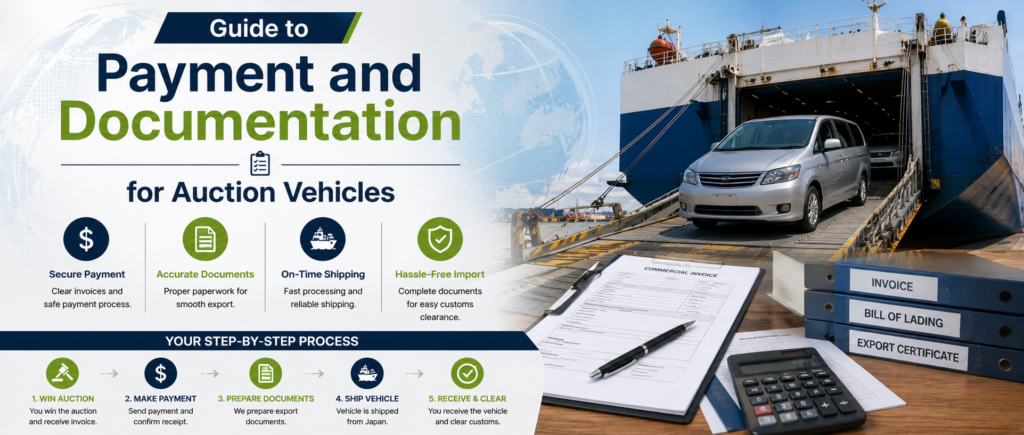
Main Payment Steps After Winning an Auction
Step 1: Receive Purchase Confirmation
After a successful bid, the exporter confirms the purchase details. The buyer should check the vehicle information, auction price, fees, and payment deadline.
Step 2: Receive Invoice
The exporter sends an invoice. This invoice usually includes the vehicle cost and Japan-side charges.
The invoice may include:
- Vehicle price
- Exporter service fee
- Auction-related costs
- Inland transport in Japan
- Port charges
- Inspection costs if required
- Shipping cost if already confirmed
Step 3: Make Payment on Time
Timely payment is very important. Delayed payment may delay vehicle release, inland transport, export procedures, and shipping booking.
Step 4: Confirm Payment Receipt
After sending payment, buyers should send payment proof to the exporter. The exporter confirms receipt and continues the export process.
Common Payment Points to Check
Bank Details
Buyers should carefully check the exporter’s official bank details before sending money.
Currency
Invoices may be issued in Japanese yen, US dollars, or another currency depending on the exporter’s system.
Bank Fees
International transfers may include bank fees. Buyers should confirm who pays these fees before sending payment.
Payment Deadline
Auction vehicles often require quick payment. Buyers should prepare funds before bidding.
Important Export Documents
Commercial Invoice
The commercial invoice shows the buyer, seller, vehicle details, price, and transaction information. Customs officers often use this document for import clearance.
Export Certificate
The export certificate is an important Japanese document. It proves that the vehicle has been prepared for export from Japan.
Bill of Lading
The bill of lading, often called B/L, is a shipping document issued by the shipping company. It shows vessel information, consignee details, loading port, destination port, and vehicle details.
Inspection Certificate
Some countries require inspection before shipment. If required, the inspection certificate must be prepared correctly.
Other Documents
Depending on the country, buyers may also need additional documents.
- Packing list
- Freight invoice
- Insurance documents
- Customs declaration documents
- Local import permit
- Roadworthiness documents
Step-by-Step Buying Flow
Step 1: Choose a Reliable Export Company
Most overseas buyers cannot access Japanese auctions directly. A professional Japanese export company helps buyers search, check, bid, pay, document, and export vehicles.
Step 2: Search Auction Stock
The exporter searches Japanese auction stock based on the buyer’s request.
Step 3: Check Auction Sheet and Photos
Before bidding, buyers should check vehicle condition carefully.
- Mileage or hour meter
- Auction grade
- Repair history
- Rust condition
- Engine comments
- Interior condition
- Body damage
Step 4: Decide Maximum Bid
The buyer decides the maximum bid based on vehicle value, condition, total cost, and local market demand.
Step 5: Win the Auction and Receive Invoice
After a successful bid, the exporter sends the invoice and payment instructions.
Step 6: Complete Payment
The buyer sends payment within the required deadline and confirms transfer details with the exporter.
Step 7: Prepare Export Documents
The exporter prepares export documents and shipping documents based on the destination country.
Step 8: Ship the Vehicle
After documents and shipping are ready, the vehicle is shipped from Japan to the destination port.
Important Points for Overseas Buyers
Check Import Rules Before Bidding
Each country has different import rules. Buyers should check age limits, emissions, inspection rules, taxes, and required documents before bidding.
Use the Correct Buyer Name
The buyer name on documents should match the import registration or customs requirements in the destination country.
Confirm the Destination Port
The destination port must be correct. Wrong port information can create extra costs and delays.
Keep All Documents Safe
Buyers should save invoices, payment proof, export documents, and shipping documents carefully.
Common Risks to Avoid
Late Payment
Late payment can delay export and shipping. Buyers should prepare funds before bidding.
Wrong Bank Transfer Details
Wrong transfer details can cause serious delays. Always confirm bank information carefully.
Incorrect Document Information
Wrong buyer name, port name, vehicle details, or invoice information can create customs problems.
Ignoring Required Inspection
Some countries require inspection before export. If buyers ignore this, the vehicle may not clear import procedures smoothly.
Why Professional Export Companies Are Important
Payment Guidance
Professional exporters provide clear invoices, payment instructions, and confirmation support.
Document Preparation
Experienced exporters understand export documents, shipping documents, and country-specific requirements.
Shipping Coordination
Export companies arrange inland transport, port handling, vessel booking, and shipping from Japan.
Risk Reduction
Professional support helps buyers avoid payment mistakes, document errors, shipping delays, and customs problems.
How EVERY TRADING Supports Overseas Buyers
EVERY TRADING is a Japanese used vehicle export company. We support customers around the world who want to buy vehicles from Japan.
Through Japanese auction vehicle search, overseas buyers can find cars, trucks, buses, tractors, machinery, vans, and many other vehicles from Japan auction stock.
Our team helps buyers search vehicles, understand auction sheets, calculate costs, complete payment steps, prepare export documents, and arrange shipping from Japan safely and smoothly.
Conclusion
Payment and documentation are essential parts of importing auction vehicles from Japan. Buyers should understand invoices, payment deadlines, export certificates, bills of lading, inspection documents, and customs requirements.
Japanese auction stock offers many opportunities, but successful import requires correct payment and accurate documents.
With professional export support, overseas buyers can reduce risk and import vehicles from Japan with more confidence.
Learn more about Japanese auctions:
Japanese Car Auction Guide
Start searching your vehicle from Japan today:
Search Auction Vehicles Now


Browse Reliable Used Trucks & Buses from Japan
Carefully selected vehicles ready for export worldwide
Search 100,000+ Dealer Stock Vehicles from Japan
Access a wide selection of vehicles from Japanese dealers nationwide. Updated daily.