How to Prepare Before Bidding on Auction Stock
Search available auction vehicles here:
Browse Auction Vehicles
Why Preparation Matters Before Bidding
Japanese used vehicle auctions offer many opportunities for overseas buyers. Buyers can find cars, trucks, buses, vans, tractors, pickup trucks, and machinery from many auction houses across Japan.
However, auction bidding moves quickly. If buyers are not prepared, they may overpay, choose the wrong vehicle, or miss important condition details.
Good preparation helps buyers make better decisions. It also reduces risk and makes the export process smoother.
This guide explains how overseas buyers should prepare before bidding on Japanese auction stock.
How Japanese Used Vehicle Auctions Work
Japanese auctions are mainly dealer-only markets. Sellers list vehicles through auction houses, and registered members place bids.
Most overseas buyers cannot bid directly. They usually need a Japanese export company or auction member to search stock, check details, and place bids.
What Auction Listings Usually Include
- Vehicle photos
- Auction sheet
- Auction grade
- Year and mileage
- Model code
- Engine size
- Transmission
- Body type
- Drive system
- Auction location
- Starting price
This information helps buyers review vehicles before bidding. Still, buyers must understand what to check and how to calculate the total cost.
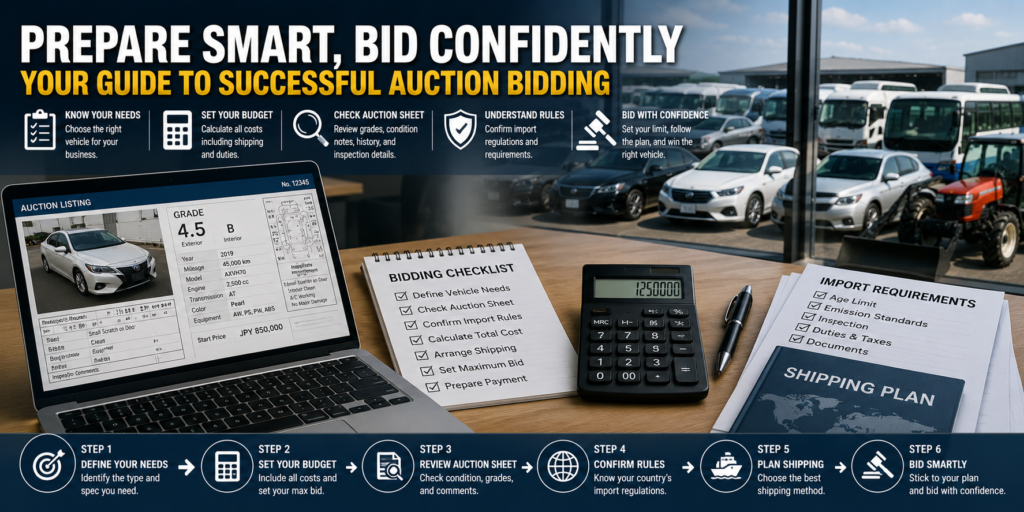
Step 1: Decide Your Buying Purpose
Before bidding, buyers should clearly decide why they need the vehicle.
- Resale business
- Personal use
- Delivery business
- Farm use
- Passenger transport
- Construction work
- Tourism service
A clear purpose helps buyers choose the right vehicle type. For example, a farm may need a tractor or mini truck. A transport company may need a bus or van.
Step 2: Choose the Right Vehicle Type
Japanese auction stock includes many categories. Buyers should compare vehicle types based on business use, road condition, local demand, and import rules.
Popular Vehicle Types
- Cars for resale and family use
- Vans for delivery and passenger transport
- Trucks for logistics and construction
- Buses for schools, hotels, and tourism
- Tractors for farm work
- Machinery for construction and rural business
Choosing the wrong type can create problems after import. Always match the vehicle to your real business needs.
Step 3: Set a Clear Budget
A clear budget is one of the most important parts of auction preparation.
The auction price is not the final cost. Overseas buyers must calculate all costs before bidding.
Total Cost May Include
- Vehicle price
- Auction fee
- Exporter service fee
- Inland transport in Japan
- Export inspection
- Cleaning or preparation cost
- Shipping cost
- Marine insurance
- Import duty
- Local port charges
- Registration cost
Buyers should set a maximum bid before the auction starts. This helps avoid emotional bidding and overpayment.
Step 4: Check Import Rules in Your Country
Each country has different import rules. Buyers should confirm these rules before bidding.
Important Import Rules to Check
- Vehicle age limit
- Emission rules
- Roadworthiness inspection
- Steering position rules
- Import duty and taxes
- Required documents
- Pre-shipment inspection rules
If a vehicle cannot be imported, the buyer may lose money. Always confirm local rules before placing a bid.
Step 5: Review the Auction Sheet
The auction sheet is a key document in Japanese auctions. It shows the real condition of the vehicle before bidding.
Important Points on the Auction Sheet
- Auction grade
- Interior grade
- Mileage
- Repair history
- Rust and corrosion
- Scratches and dents
- Engine comments
- Transmission comments
- Inspector notes
Photos are useful, but they do not show everything. The auction sheet can show hidden problems that photos may not reveal.
Step 6: Check Vehicle-Specific Points
For Cars
- Mileage
- Interior condition
- Repair history
- Fuel economy
- Market resale value
For Trucks
- Payload
- Body type
- Frame rust
- Engine condition
- Truck bed condition
For Buses
- Seat capacity
- Air conditioning
- Interior condition
- Rust
- Engine and transmission
For Tractors
- Horsepower
- PTO condition
- Hydraulics
- Tires or crawlers
- Attachments
Each vehicle type has different risk points. Buyers should not use the same checklist for every vehicle.
Step 7: Compare Similar Vehicles
Do not bid on the first vehicle you find. Compare several similar vehicles before deciding.
This helps buyers understand normal market prices and condition differences.
Compare These Points
- Year
- Mileage or hours
- Auction grade
- Condition comments
- Photos
- Location in Japan
- Total estimated cost
A slightly more expensive vehicle may be better if it has lower repair risk.
Step 8: Confirm Shipping Method
Shipping method depends on vehicle type, size, destination, and route.
Common Shipping Methods
- RORO shipping
- Container shipping
- Flat rack shipping
- Special machinery shipping
Cars, vans, trucks, and buses often use RORO shipping. Smaller tractors and machinery may use containers. Larger machinery may need special loading.
Step 9: Prepare Payment and Documents
After a successful bid, payment and documents must move quickly. Buyers should prepare payment plans before bidding.
They should also confirm what documents are required in their country.
Common Export Documents
- Invoice
- Export certificate
- Bill of lading
- Inspection certificate
- Marine insurance document
- Other required documents by country
Common Mistakes Before Bidding
- Bidding without checking import rules
- Looking only at the starting price
- Ignoring auction sheet comments
- Not calculating total landed cost
- Choosing the wrong vehicle type
- Ignoring rust and repair history
- Bidding without a maximum budget
- Not using professional export advice
A low auction price can become expensive if the vehicle has serious problems or high import costs.
Why Use a Professional Export Company?
Japanese auctions are useful, but they can be difficult for overseas buyers. A professional export company helps buyers prepare correctly before bidding.
Auction Access
Export companies can access dealer-only auction systems and search many vehicles across Japan.
Auction Sheet Translation
Most auction sheets are written in Japanese. Exporters can explain grades, damage marks, repair history, and inspector comments in English.
Total Cost Support
Experienced exporters can help calculate estimated costs, including inland transport and shipping.
Vehicle Advice
Exporters can recommend suitable vehicles based on market demand, business use, road condition, and import rules.
Shipping and Documentation
Professional exporters arrange inland transport, export documents, inspection, shipping booking, and document delivery.
Best Preparation Checklist
- Decide your vehicle purpose.
- Choose the correct vehicle type.
- Set your maximum bid.
- Check import rules.
- Review the auction sheet.
- Compare similar vehicles.
- Calculate total cost.
- Confirm shipping method.
- Prepare payment and documents.
- Work with a trusted exporter.
Conclusion
Preparing before bidding is the key to successful buying from Japanese auction stock.
Overseas buyers should check the vehicle purpose, auction sheet, total cost, import rules, shipping method, and market value before placing a bid.
With good preparation and professional support, Japanese auctions can become a reliable source for cars, trucks, buses, vans, tractors, and machinery.
EVERY TRADING is a Japanese used vehicle export company. We export cars, trucks, buses, tractors, agricultural vehicles, and machinery to customers around the world.
Overseas buyers can search Japanese auction vehicles through our online auction vehicle search system and prepare better before bidding on suitable stock from Japan.
Learn more about Japanese auctions:
Japanese Car Auction Guide
Start searching your vehicle from Japan today:
Search Auction Vehicles Now


Browse Reliable Used Trucks & Buses from Japan
Carefully selected vehicles ready for export worldwide
Search 100,000+ Dealer Stock Vehicles from Japan
Access a wide selection of vehicles from Japanese dealers nationwide. Updated daily.