
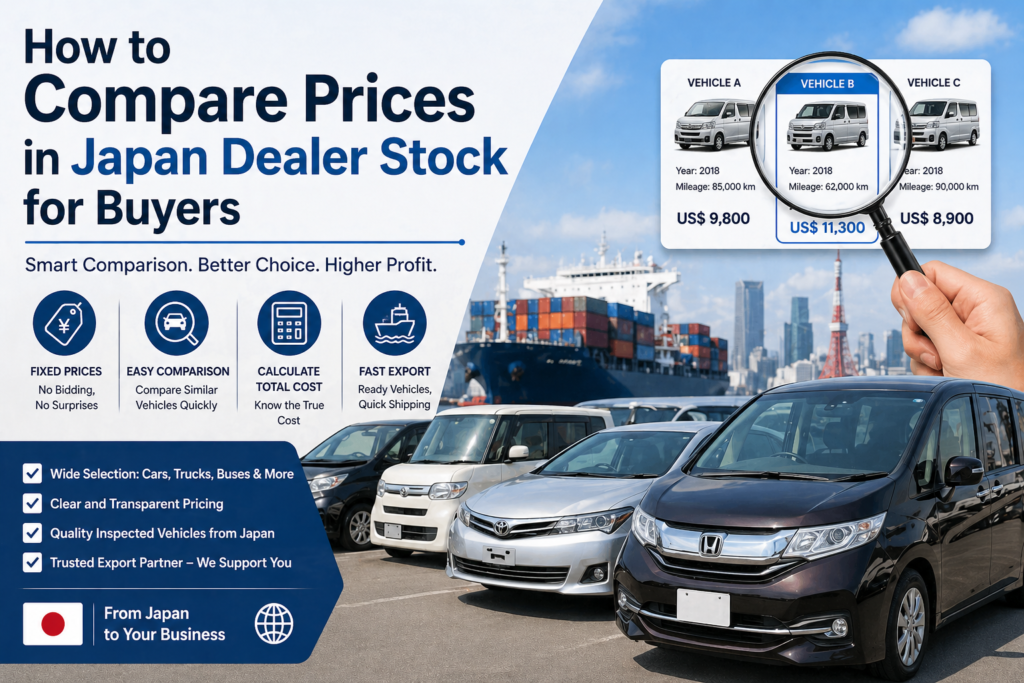
How to Compare Prices in Japan Dealer Stock for Smart Buying
How to Compare Prices in Japan Dealer Stock is an important skill for buyers who want to import vehicles from Japan. Many global buyers choose dealer stock because it is simple, fast, and reliable.
Japan offers a wide range of cars, trucks, buses, and even tractors. However, prices can vary depending on condition, model, and demand. Understanding how to compare prices correctly helps you avoid overpaying and improve your profit.
This guide explains How to Compare Prices in Japan Dealer Stock in a simple way. It focuses on clear pricing, fast decisions, and smart buying strategies for your business.
1. Understand How Dealer Stock Pricing Works
Dealer stock vehicles have fixed prices. This is different from auctions where prices change based on bidding.
You can explore available units here: Japanese dealer stock vehicles.
Fixed pricing makes comparison easier. You can see the exact cost without guessing or waiting.
However, not all prices are the same. Even similar vehicles may have different prices. This is because of factors such as:
– Vehicle condition
– Mileage
– Year of manufacture
– Equipment and features
– Market demand
Understanding these factors is the first step in How to Compare Prices in Japan Dealer Stock.
2. Compare Similar Vehicles Correctly
To compare prices effectively, you must look at similar vehicles. Do not compare completely different models.
For example, compare:
– Same brand and model
– Similar year
– Close mileage range
– Same type (sedan, truck, tractor, bus)
This helps you understand the real market price.
If one vehicle is cheaper, check why. It may have higher mileage or lower condition. If one is more expensive, it may have better features or lower mileage.
You can compare multiple listings using used vehicles from Japan dealer stock. This allows quick side-by-side evaluation.
How to Compare Prices in Japan Dealer Stock becomes easier when you focus on similar data.
3. Check Total Cost, Not Only Vehicle Price
Many beginners make a mistake. They only look at the vehicle price. This can lead to wrong decisions.
You should always calculate the total cost, including:
– Vehicle price
– Shipping cost
– Export fees
– Import tax in your country
A cheaper vehicle may have higher shipping cost. A slightly expensive unit may be better overall.
Also, consider fuel efficiency and maintenance cost. These affect your long-term profit.
For business buyers, total cost is more important than initial price.
How to Compare Prices in Japan Dealer Stock means looking at the full picture, not only one number.
4. Use Dealer Stock for Faster and Safer Decisions
Dealer stock gives you speed and confidence. This is why many professionals prefer it.
Speed: You can buy immediately without waiting.
Transparency: Prices are clear and stable.
Reliability: Vehicles are already available and ready for export.
In auctions, prices may be lower, but they are not predictable. You may waste time or lose good units.
Dealer stock allows you to compare prices quickly and make fast decisions. This is important in competitive markets.
To understand the full process, read this Japanese dealer stock vehicles guide.
Working with a trusted exporter like EVERY TRADING also helps. You get clear information, fast response, and professional support.
How to Compare Prices in Japan Dealer Stock becomes simple when you use the right system and partner.
Conclusion
How to Compare Prices in Japan Dealer Stock is a key skill for successful importing. It helps you choose the right vehicles and avoid unnecessary costs.
Focus on comparing similar units, checking total cost, and using reliable sources. Dealer stock gives you fixed prices, fast purchase, and quick export.
If you want a simple and effective buying process, dealer stock is the best choice. With the right strategy, you can grow your vehicle business with confidence and stability.


Browse Reliable Used Trucks & Buses from Japan
Carefully selected vehicles ready for export worldwide
Search 100,000+ Dealer Stock Vehicles from Japan
Access a wide selection of vehicles from Japanese dealers nationwide. Updated daily.