How to Work with a Japanese Vehicles Exporter
Search available auction vehicles here:
Browse Auction Vehicles
Why Working with a Japanese Vehicle Exporter Matters
Buying used vehicles from Japan is a great opportunity for overseas buyers. Japan offers a wide range of cars, trucks, buses, vans, tractors, pickup trucks, and machinery.
However, buying from Japan can be difficult without local support. Many Japanese auctions are dealer-only. Auction sheets are often written in Japanese. Export documents, shipping schedules, and inspection rules also require experience.
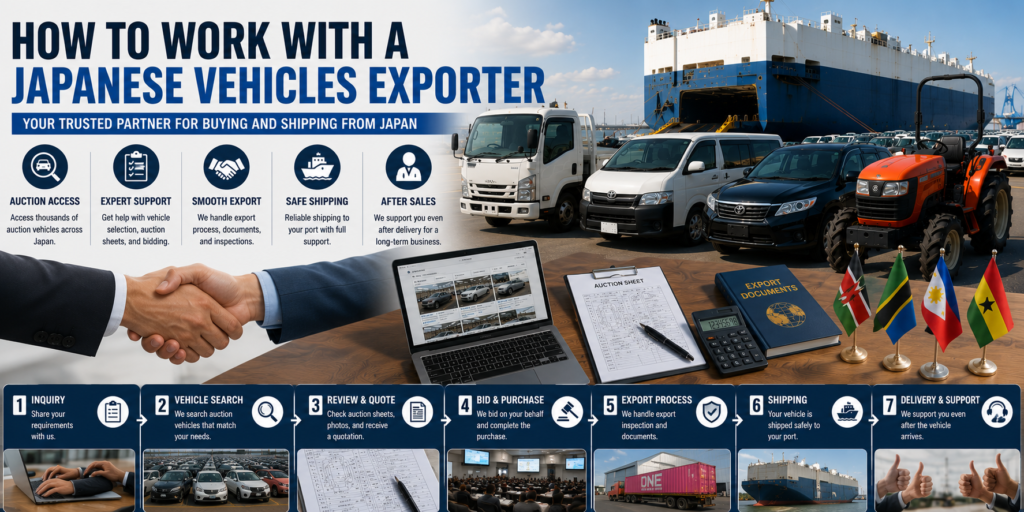
This is why working with a professional Japanese vehicle exporter is important. A good exporter helps buyers search, check, bid, purchase, ship, and receive documents safely.
For importers, dealers, farmers, transport companies, and business buyers, the right exporter can make the buying process smoother and more secure.
How Japanese Used Vehicle Auctions Work
Japanese used vehicle auctions are large dealer-only markets. Vehicles are listed by dealers, leasing companies, rental companies, trade-in suppliers, fleet owners, farms, and machinery companies.
Most overseas buyers cannot bid directly. They usually need a Japanese exporter or licensed auction member to access auction systems.
What Buyers Can Check Before Bidding
- Vehicle photos
- Auction sheet
- Auction grade
- Year and mileage
- Model code
- Engine type
- Transmission
- Body type
- Drive system
- Inspector comments
- Auction location
This information helps buyers choose vehicles before bidding. A professional exporter helps explain the details and reduce risk.
Benefits for Overseas Buyers
Access to Japanese Auction Stock
Exporters can access dealer-only auction systems and search vehicles across Japan. This gives buyers more choices than normal online listings.
Better Vehicle Selection
A good exporter helps buyers choose vehicles that match their destination market, budget, road conditions, and business purpose.
Clear Condition Support
Exporters can explain auction sheets, vehicle grades, damage marks, rust notes, repair history, and inspector comments.
Export and Shipping Support
Exporters manage many steps after purchase, including inland transport, inspection, documents, shipping booking, and document delivery.
Step 1: Share Your Vehicle Requirements
The first step is to tell the exporter what you need. Clear information helps the exporter search faster and more accurately.
Information to Share
- Vehicle type
- Preferred maker and model
- Budget range
- Year range
- Mileage or machine hours
- Destination country and port
- Business purpose
- Special requirements
For example, a transport company may need a Toyota Coaster bus. A farm may need a Kubota tractor. A dealer may need several fuel-efficient cars for resale.
Step 2: Search Available Auction Vehicles
After receiving your requirements, the exporter searches available auction stock in Japan.
Japanese auction stock can include:
- Passenger cars
- SUVs and 4WD vehicles
- Commercial vans
- Light trucks
- Medium and heavy trucks
- Buses and microbuses
- Farm tractors
- Forklifts and machinery
The exporter can send suitable options with photos, auction sheets, grades, mileage, and estimated costs.
Step 3: Review Auction Sheets and Photos
Before bidding, buyers must check the auction sheet and photos carefully.
Key Points to Review
- Auction grade
- Interior grade


Browse Reliable Used Trucks & Buses from Japan
Carefully selected vehicles ready for export worldwide

Search 100,000+ Dealer Stock Vehicles from Japan
Access a wide selection of vehicles from Japanese dealers nationwide. Updated daily.
