How to Understand Vehicle Photos in Japanese Auctions
Search available auction vehicles here:
Browse Auction Vehicles
Why Vehicle Photos Matter in Japanese Auctions
Japanese used vehicle auctions are a great source for overseas buyers. Buyers can find cars, trucks, buses, vans, tractors, pickup trucks, and machinery from many auction houses across Japan.
However, overseas buyers usually cannot inspect vehicles in person. This makes auction photos very important.
Photos help buyers understand the vehicle’s exterior, interior, equipment, body condition, and general appearance before bidding.
Still, photos do not show everything. Buyers must learn how to read photos carefully and compare them with the auction sheet.
How Japanese Used Vehicle Auctions Work
Japanese auctions are mainly dealer-only markets. Sellers list vehicles through auction houses, and registered members place bids.
Most overseas buyers cannot bid directly. They usually work with a Japanese export company or auction member.
What Auction Listings Usually Include
- Vehicle photos
- Auction sheet
- Auction grade
- Year and mileage
- Model code
- Engine type
- Transmission
- Body type
- Drive system
- Inspector comments
Photos and auction sheets should always be checked together. A clean photo does not always mean a perfect vehicle.
Benefits for Overseas Buyers
Better Remote Inspection
Photos allow overseas buyers to check vehicle condition from outside Japan.
Faster Vehicle Comparison
Buyers can compare many auction vehicles quickly by checking photos, grades, and basic details.
Useful for Business Decisions
Dealers can judge resale appeal. Farmers can check tractor attachments. Transport companies can check bus seats and body size.
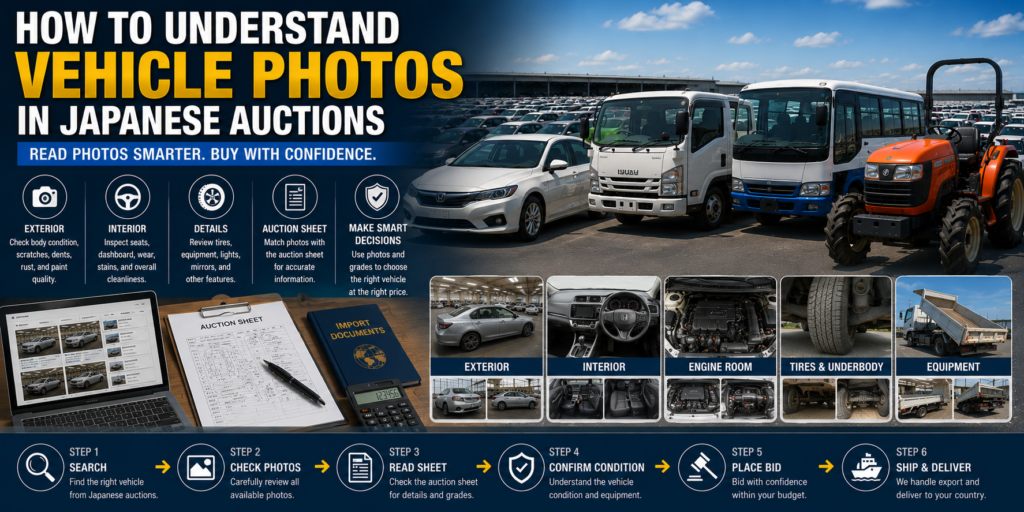
What to Check in Exterior Photos
- Scratches and dents
- Paint condition
- Rust around panels
- Door gaps
- Bumper damage
- Headlights and taillights
- Tire condition
- Body alignment
Small scratches may be acceptable for work vehicles. However, heavy rust, uneven panels, or serious damage need careful checking.
What to Check in Interior Photos
- Seat wear
- Dashboard condition
- Steering wheel wear
- Floor condition
- Air conditioner controls
- Warning lights
- Cleanliness
- Odor or stain signs
Interior condition is very important for passenger cars, buses, vans, and resale vehicles.
Important Photo Checks by Vehicle Type
Cars and SUVs
Check body shine, panel gaps, headlights, tires, interior seats, dashboard, and trunk space.
Trucks
Check the frame, cargo bed, rear gate, crane, dump body, rust, and equipment condition.
Buses
Check seat condition, air conditioning vents, passenger door, floor, windows, and body rust.
Tractors and Machinery
Check tires, crawlers, hydraulic parts, PTO, attachments, oil leaks, seat condition, and engine area.
Do Not Depend on Photos Only
Photos are useful, but they cannot show all problems. Oil leaks, engine noise, underbody rust, and repair history may not be clear.
Always compare photos with the auction sheet and inspector comments.
Purchase Flow from Japanese Auctions
Step 1: Search Auction Stock
Search by maker, model, year, mileage, body type, grade, and destination needs.
Step 2: Check Photos
Review exterior, interior, engine room, tires, cargo area, equipment, and special parts.
Step 3: Read the Auction Sheet
Check grade, damage marks, repair history, rust notes, and inspector comments.
Step 4: Confirm Total Cost
- Vehicle price
- Auction fee
- Exporter fee
- Inland transport
- Inspection cost
- Shipping cost
- Import duty
- Local charges
Step 5: Place a Bid
Set a maximum bid before the auction starts. Avoid emotional bidding.
Step 6: Export and Shipping
After purchase, the exporter arranges transport, documents, inspection, and shipping.
Common Mistakes When Reading Photos
- Judging only by the first photo
- Ignoring rust around the lower body
- Not checking interior wear
- Missing tire condition
- Not checking truck equipment
- Ignoring auction sheet comments
- Assuming clean photos mean no problems
Why Use a Professional Export Company?
A professional Japanese exporter helps buyers understand auction photos more accurately.
Photo Review Support
Exporters can point out visible damage, rust, wear, and warning signs.
Auction Sheet Translation
Most auction sheets are written in Japanese. Exporters can explain the key points in English.
Risk Advice
Experienced exporters can help buyers avoid vehicles with hidden risk.
Shipping and Documentation
Exporters handle inland transport, export documents, inspection, shipping booking, and document delivery.
Conclusion
Vehicle photos are very important in Japanese auctions, especially for overseas buyers who cannot inspect vehicles in person.
However, photos should never be checked alone. Buyers should compare photos with auction sheets, grades, and inspector comments.
EVERY TRADING is a Japanese used vehicle export company. We export cars, trucks, buses, tractors, agricultural vehicles, and machinery to customers around the world.
Overseas buyers can search Japanese auction vehicles through our online auction vehicle search system and check available stock directly from Japan.
Learn more about Japanese auctions:
Japanese Car Auction Guide
Start searching your vehicle from Japan today:
Search Auction Vehicles Now


Browse Reliable Used Trucks & Buses from Japan
Carefully selected vehicles ready for export worldwide
Search 100,000+ Dealer Stock Vehicles from Japan
Access a wide selection of vehicles from Japanese dealers nationwide. Updated daily.