How to Compare Tractors, Trucks, Cars, and Buses in Auction Stock
Search available auction vehicles here:
Browse Auction Vehicles
Why Comparing Auction Stock Is Important
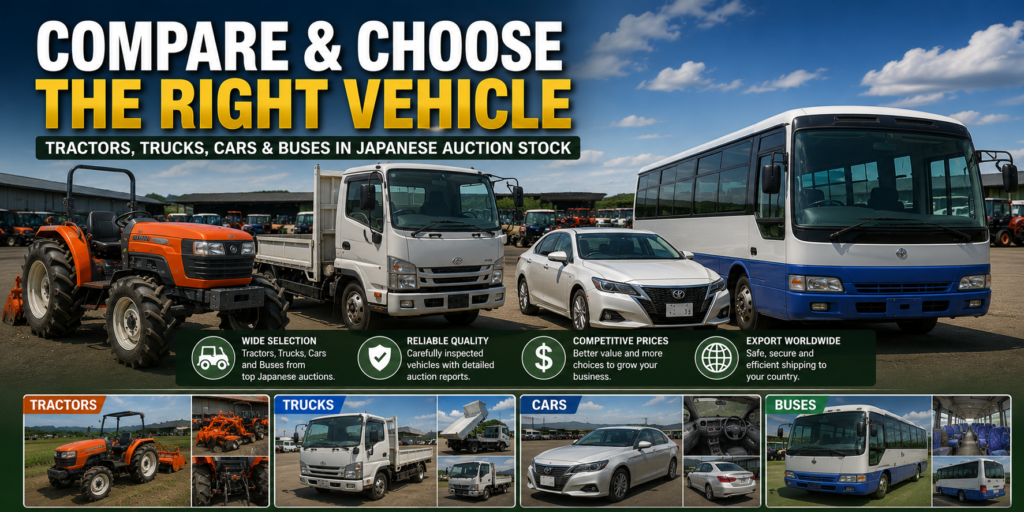
Japanese auction stock includes many types of vehicles. Overseas buyers can find cars, trucks, buses, tractors, vans, pickup trucks, and machinery from many auction houses across Japan.
However, each vehicle type has a different purpose, cost, inspection point, and shipping method. A passenger car and a farm tractor cannot be compared in the same way.
For importers, dealers, transport companies, farmers, and business buyers, proper comparison is very important. It helps buyers choose the right stock, avoid risk, and improve profit.
This guide explains how to compare tractors, trucks, cars, and buses in Japanese auction stock before buying from Japan.
How Japanese Used Vehicle Auctions Work
Japanese used vehicle auctions are dealer-only markets. Sellers list vehicles through auction houses across Japan. These sellers may include dealers, leasing companies, rental companies, companies, farms, trade-in suppliers, and fleet owners.
Most overseas buyers cannot bid directly. They usually need a Japanese export company or licensed auction member to access auction systems and place bids.
What Buyers Can Check in Auction Listings
- Vehicle photos
- Auction sheet or condition notes
- Auction grade
- Year and mileage
- Model code
- Engine type
- Transmission
- Body type
- Drive system
- Location in Japan
- Starting price
This information helps buyers compare vehicles before bidding. However, the key comparison points change depending on the vehicle type.
Benefits for Overseas Buyers
Access to Many Vehicle Categories
Japanese auctions offer many categories in one market. Buyers can search both passenger vehicles and business vehicles from Japan.
Reliable Japanese Brands
Many Japanese brands are trusted worldwide for durability, fuel efficiency, and easy maintenance.
- Toyota
- Nissan
- Honda
- Hino
- Isuzu
- Mitsubishi Fuso
- Kubota
- Yanmar
- Iseki
Better Stock Planning
Dealers can compare different stock types and choose vehicles that match local market demand.
For example, one market may need compact cars. Another market may need buses, trucks, or tractors.
Flexible Business Opportunities
Japanese auctions help buyers source vehicles for many industries, including farming, transport, construction, logistics, tourism, and retail resale.
How to Compare Passenger Cars
Main Purpose
Passenger cars are usually bought for private use, resale, taxi service, company cars, or family transport.
Buyers often focus on comfort, fuel economy, mileage, grade, and resale value.
Key Points to Check
- Auction grade
- Mileage
- Interior grade
- Repair history
- Fuel type
- Transmission
- Engine size
- Exterior condition
- Market popularity
For passenger cars, clean condition and low mileage can strongly affect resale value.
How to Compare Trucks
Main Purpose
Trucks are bought for business use. They support delivery, construction, farming, logistics, mining, waste collection, and local transport.
Truck buyers should focus on function, payload, body type, engine condition, and frame condition.
Key Points to Check
- Payload capacity
- Body type
- Engine model
- Transmission
- Frame rust
- Truck bed condition
- Equipment condition
- Repair history
- Shipping size
Common Truck Body Types
- Flat body truck
- Dump truck
- Crane truck
- Box truck
- Refrigerated truck
- Garbage truck
- Tanker truck
A truck may look good in photos, but frame rust or equipment problems can create high repair costs.
How to Compare Buses
Main Purpose
Buses are used for school transport, hotel shuttle service, tourism, staff transport, church service, public routes, and airport transfer.
Bus buyers should compare seat capacity, air conditioning, interior condition, engine condition, and body size.
Key Points to Check
- Seat capacity
- Interior condition
- Air conditioning
- Engine condition
- Transmission
- Rust and corrosion
- Body size
- Passenger door condition
- Import registration rules
For hot countries, air conditioning can be very important. For rural routes, body size and ground clearance may also matter.
How to Compare Tractors
Main Purpose
Tractors are bought for farm use. They support plowing, tilling, mowing, hauling, rice field work, orchard work, and general agriculture.
Tractor buyers should compare horsepower, drive type, attachments, tires, hydraulics, and PTO condition.
Key Points to Check
- Horsepower
- 2WD or 4WD
- Engine condition
- Hydraulic operation
- PTO condition
- Tires or crawlers
- Hour meter
- Attachments
- Shipping size and weight
Common Tractor Attachments
- Rotary tiller
- Front loader
- Bucket
- Mower
- Blade
- Trailer hitch
For tractors, a lower price is not always better. Missing attachments or worn tires can increase the final cost.
Comparison Table by Vehicle Type
| Vehicle Type | Main Use | Most Important Checks | Common Buyer |
|---|---|---|---|
| Cars | Private use, resale, taxi, company use | Grade, mileage, repair history, interior | Dealers, private buyers, companies |
| Trucks | Delivery, logistics, farming, construction | Payload, body type, frame, engine, rust | Importers, companies, contractors |
| Buses | School, tourism, shuttle, public transport | Seats, AC, interior, rust, engine | Transport companies, schools, hotels |
| Tractors | Farm work, field work, hauling | Horsepower, PTO, hydraulics, tires, attachments | Farmers, dealers, agricultural businesses |
Purchase Flow from Japanese Auctions
Step 1: Decide the Vehicle Purpose
Before searching, buyers should decide why they need the vehicle. Purpose affects the best choice.
- Resale business
- Passenger transport
- Farm work
- Construction use
- Delivery business
- Tourism service
Step 2: Choose the Right Category
After deciding the purpose, choose the correct category. A rural business may need a truck or tractor. A hotel may need a bus or van. A dealer may need cars with strong resale value.
Step 3: Search Auction Stock
Search Japanese auction stock by maker, model, model code, body type, mileage, grade, and auction date.
Step 4: Check Auction Sheet and Photos
The auction sheet is very important. Buyers should check repair history, rust, damage marks, interior grade, and inspector comments.
For tractors and machinery, buyers should also check condition notes, attachments, tires, and hour meter.
Step 5: Confirm Total Cost
The auction price is not the final cost. Buyers should calculate all costs before bidding.
- Vehicle price
- Auction fee
- Exporter fee
- Inland transport in Japan
- Export inspection
- Shipping cost
- Marine insurance
- Import duty
- Local port charges
- Registration cost
Step 6: Place a Bid
After checking the vehicle and total budget, the exporter places the bid. Buyers should set a clear maximum bid.
Step 7: Export and Shipping
If the bid is successful, the exporter arranges inland transport, documents, inspection, and shipping to the destination country.
Important Points Before Bidding
Check Import Rules
Each country has different rules for cars, trucks, buses, and tractors. Buyers should confirm age limits, emission rules, inspection needs, and taxes before bidding.
Compare Total Value, Not Only Price
The cheapest vehicle is not always the best. Buyers should compare condition, repair cost, shipping cost, and resale value.
Check Parts Availability
Popular models are usually easier to maintain. Parts availability is very important for business vehicles and rural markets.
Read Condition Information Carefully
Photos alone are not enough. Auction sheets and condition notes can show hidden problems.
Why Use a Professional Export Company?
Comparing different vehicle types in Japanese auctions requires experience. A professional export company helps buyers make better decisions.
Auction Access
Export companies can access Japanese dealer auctions and search many vehicles across Japan.
Auction Sheet Translation
Most auction sheets are written in Japanese. Exporters can explain important details in English.
Vehicle Category Advice
Experienced exporters understand the difference between cars, trucks, buses, and tractors. They can recommend suitable vehicles based on business needs.
Shipping Support
Different vehicles need different shipping methods. Exporters can arrange RORO, container, or special shipping when needed.
Conclusion
Japanese auction stock offers many choices for overseas buyers. However, cars, trucks, buses, and tractors must be compared in different ways.
Cars need clean condition and resale value. Trucks need payload and frame checks. Buses need seat and air conditioning checks. Tractors need horsepower, PTO, hydraulics, and attachment checks.
By comparing vehicles correctly, buyers can reduce risk and choose better stock from Japan auctions.
EVERY TRADING is a Japanese used vehicle export company. We export cars, trucks, buses, tractors, agricultural vehicles, and machinery to customers around the world.
Overseas buyers can search Japanese auction vehicles through our online auction vehicle search system and compare suitable stock directly from Japan.
Learn more about Japanese auctions:
Japanese Car Auction Guide
Start searching your vehicle from Japan today:
Search Auction Vehicles Now


Browse Reliable Used Trucks & Buses from Japan
Carefully selected vehicles ready for export worldwide
Search 100,000+ Dealer Stock Vehicles from Japan
Access a wide selection of vehicles from Japanese dealers nationwide. Updated daily.