
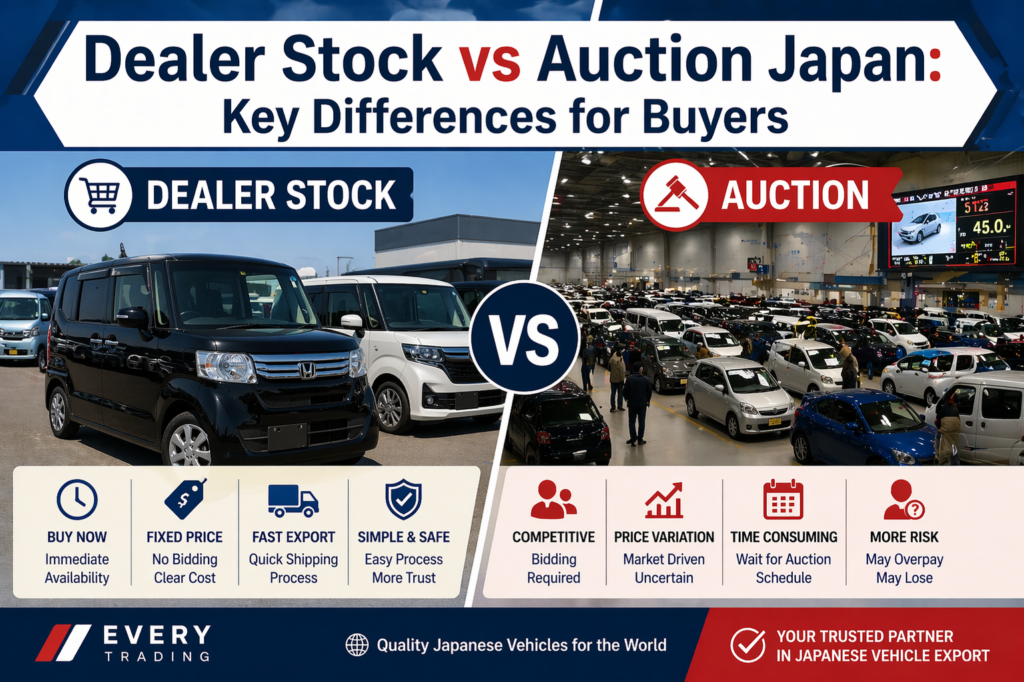
Dealer Stock vs Auction: Key Differences Explained
When importing vehicles from Japan, many buyers compare dealer stock vs auction systems. Understanding the difference is important for making better business decisions.
Both methods offer access to cars, trucks, buses, and even tractors. However, the buying process, pricing, and speed are very different. Choosing the right method can affect your cost, delivery time, and overall business success.
In this guide, we explain the key differences between dealer stock and auction systems. This will help overseas buyers select the best option for their needs.
What is Dealer Stock in Japan?
Dealer stock refers to vehicles already owned or secured by Japanese exporters or dealers. These vehicles are ready for immediate purchase.
Buyers can browse Japanese dealer stock vehicles and select units with fixed prices. There is no need to wait or compete with other buyers.
The biggest advantage of dealer stock is speed. Once you confirm the vehicle, the export process can start quickly. This is very useful for buyers who need fast delivery.
Dealer stock also offers simplicity. The process is clear and easy. Even first-time buyers can understand it without experience in auctions.
What is the Auction System in Japan?
Japan has one of the largest used vehicle auction markets in the world. Thousands of vehicles are listed every day.
In auctions, buyers must place bids during a limited time. The highest bidder wins the vehicle. This system offers a wide selection, including rare models and special units.
However, auctions require experience. Prices can change quickly due to competition. Buyers may also lose bids and need to wait for another opportunity.
For new importers, auctions can be complex. They require careful timing, market knowledge, and strong decision-making skills.
Key Differences: Dealer Stock vs Auction
The main differences between dealer stock vs auction come down to speed, pricing, and process.
1. Purchase Speed
Dealer stock allows immediate purchase. Auctions require waiting for the right vehicle and bidding at the right time.
2. Pricing
Dealer stock has fixed prices. Auctions have variable prices depending on demand and competition.
3. Risk Level
Dealer stock is more stable. Auctions carry more risk because you may overpay or lose bids.
4. Simplicity
Dealer stock is simple and direct. Auctions require experience and strategy.
Because of these points, many buyers now prefer used vehicles from Japan dealer stock for smoother transactions.
Which Option is Better for Your Business?
The right choice depends on your business style and goals.
If you want fast delivery, clear pricing, and easy buying, dealer stock is the best option. It supports stable business operations and reduces stress in the buying process.
If you want a wider selection and are comfortable with bidding, auctions can offer more choices. However, it requires more time and experience.
Many professional importers use both methods. They use dealer stock for quick sales and auctions for special deals.
For buyers who are starting or expanding their business, dealer stock is often the safer and more efficient choice. It helps build trust with customers and ensures consistent supply.
You can also learn more about this system in this Japanese dealer stock vehicles guide.
Conclusion
Understanding dealer stock vs auction is essential for anyone importing vehicles from Japan. Each method has its own advantages, but dealer stock stands out for speed, reliability, and simplicity.
With dealer stock, buyers can purchase immediately, know the exact price, and start export quickly. This makes it ideal for cars, trucks, buses, and tractors used in business operations.
If your goal is to reduce risk and grow your business efficiently, dealer stock vehicles from Japan offer a strong and practical solution.


Browse Reliable Used Trucks & Buses from Japan
Carefully selected vehicles ready for export worldwide
Search 100,000+ Dealer Stock Vehicles from Japan
Access a wide selection of vehicles from Japanese dealers nationwide. Updated daily.