
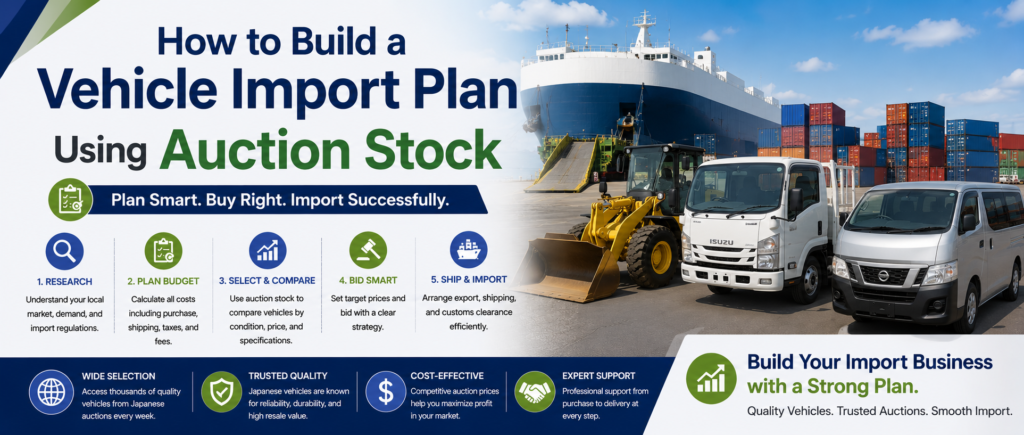
How to Build a Vehicle Import Plan Using Auction Stock
Search available auction vehicles here:
Browse Auction Vehicles
Introduction
Building a strong vehicle import plan is very important for overseas buyers. Japanese auction stock offers many opportunities to import cars, trucks, buses, tractors, vans, and machinery at competitive prices.
However, successful importing requires more than simply buying vehicles from auctions. Buyers must understand market demand, auction prices, shipping costs, import regulations, vehicle condition, and business goals before bidding.
A good import plan helps buyers reduce risk, control costs, improve profits, and grow their business more safely.
This guide explains how to build a vehicle import plan using Japanese auction stock. It also explains how the Japanese auction system works, the benefits for overseas buyers, the buying process, important risks, and why professional export support is important.
How the Japanese Used Vehicle Auction System Works
Japanese used vehicle auctions are professional systems where vehicles are sold through bidding. Auction houses across Japan list thousands of vehicles every week.
Vehicles may come from dealers, lease companies, rental fleets, private owners, trade-ins, and business fleets.
Types of Vehicles Available in Auction Stock
Japanese auction stock includes many vehicle categories:
- Compact cars
- Sedans
- SUVs
- Pickup trucks
- Mini trucks
- Commercial vans
- Buses
- Dump trucks
- Crane trucks
- Tractors
- Construction machinery
Understanding Auction Sheets
Most auction vehicles include auction sheets. These documents explain vehicle condition before bidding.
Auction sheets may include:
- Mileage
- Auction grade
- Repair history
- Interior condition
- Exterior condition
- Rust notes
- Mechanical comments
- Equipment information
How the Bidding System Works
Vehicles are usually sold through bidding. Overseas buyers normally work with a Japanese export company that places bids on their behalf.
The buyer decides the maximum bid price before the auction starts.
Why Overseas Buyers Use Japanese Auction Stock
Large Vehicle Selection
Japanese auction stock offers a huge number of vehicles every week. Buyers can compare many brands, models, years, and price ranges.
Reliable Japanese Vehicles
Japanese vehicles are trusted worldwide because they are durable, fuel-efficient, and reliable.
Popular brands include:
- Toyota
- Nissan
- Honda
- Mazda
- Subaru
- Mitsubishi
- Suzuki
- Isuzu
- Hino
Good Business Opportunities
Japanese auction stock helps dealers, importers, and businesses increase inventory and expand sales opportunities.
Competitive Prices
Auction prices are based on market demand, which can help buyers find vehicles at reasonable prices.
Why an Import Plan Is Important
Many first-time buyers focus only on winning auctions. However, successful import business requires long-term planning.
An import plan helps buyers:
- Control budget
- Reduce risks
- Choose better vehicles
- Understand local demand
- Improve profits
- Avoid unexpected costs
Step 1: Understand Your Local Market
Research Popular Vehicle Types
Before importing, buyers should study local market demand carefully.
Some countries prefer compact cars, while others prefer SUVs, trucks, buses, or tractors.
Check Customer Needs
Different customers need different vehicles:
- Taxi businesses
- Tourism companies
- Construction companies
- Farm businesses
- Transport companies
- Private buyers
Study Competitor Prices
Understanding local selling prices helps buyers calculate possible profit before importing.
Step 2: Decide Your Import Budget
A proper import plan requires a clear budget.
Buyers should calculate:
- Auction purchase price
- Exporter fee
- Inland transport
- Shipping cost
- Import taxes
- Customs charges
- Repair cost
- Registration cost
Keep Emergency Funds
Unexpected costs may happen after import. Buyers should prepare reserve funds for repairs or shipping delays.
Step 3: Choose the Right Vehicle Types
Passenger Cars
Compact cars and sedans are often easier to sell because they are economical and practical.
SUVs and Pickup Trucks
SUVs and pickup trucks are popular in areas with rough roads and outdoor business activity.
Commercial Trucks
Commercial trucks support logistics, construction, and delivery businesses.
Buses
Tourism companies and passenger transport businesses often need used buses from Japan.
Tractors and Machinery
Farm businesses and construction companies often import tractors and machinery for work use.
Step 4: Build a Vehicle Selection Strategy
Compare Vehicle Condition
Price alone should not decide the purchase. Buyers should compare:
- Mileage
- Auction grade
- Repair history
- Rust condition
- Interior condition
- Equipment condition
Choose Reliable Models
Reliable models often sell faster and maintain stronger resale value.
Focus on Parts Availability
Vehicles with easy parts availability are usually easier to maintain locally.
Step 5: Build a Bidding Strategy
Set Maximum Bid Prices
Buyers should decide maximum bid prices before the auction starts.
This helps prevent emotional bidding and overspending.
Compare Several Vehicles
Do not focus on only one vehicle. Comparing several similar units creates better buying opportunities.
Understand Market Trends
Prices may rise during high demand periods. Buyers should monitor auction trends regularly.
Step 6: Build a Shipping and Logistics Plan
Choose the Right Shipping Method
Most vehicles ship from Japan using:
- RoRo shipping
- Container shipping
Large machinery and special vehicles may require different shipping arrangements.
Understand Shipping Time
Shipping schedules vary depending on destination country and shipping company.
Prepare Import Documents
Important export and import documents may include:
- Invoice
- Bill of lading
- Export certificate
- Inspection certificate
- Customs documents
Step 7: Understand Import Risks
Rust Problems
Rust can affect long-term vehicle value and repair cost.
Repair History
Vehicles with accident history may create future maintenance problems.
Import Regulation Problems
Each country has different rules regarding:
- Vehicle age limits
- Emission standards
- Inspection rules
- Import taxes
Overbidding
Bidding too high can reduce business profit.
Step-by-Step Buying Process
Step 1: Choose a Professional Export Company
Most overseas buyers cannot access Japanese auctions directly. Professional exporters help buyers search, compare, bid, and export vehicles.
Step 2: Search Auction Stock
The exporter searches available Japanese auction stock based on the buyer’s plan and budget.
Step 3: Check Auction Sheets and Photos
Carefully review condition before bidding.
Step 4: Decide Bid Prices
Set maximum bids based on total import cost and expected resale value.
Step 5: Bid and Purchase
The export company places bids on behalf of the buyer.
Step 6: Arrange Export and Shipping
After purchase, the exporter arranges transport, export documents, and shipping from Japan.
Why Professional Export Companies Are Important
Better Auction Knowledge
Professional exporters understand auction grades, pricing trends, and vehicle condition risks.
Condition Support
Experienced exporters help buyers understand auction sheets and vehicle condition.
Shipping and Export Support
Export companies arrange shipping schedules, documents, customs support, and logistics.
Long-Term Business Support
Professional support helps buyers build safer and more stable import businesses.
How EVERY TRADING Supports Import Businesses
EVERY TRADING is a Japanese used vehicle export company. We support customers around the world who want to buy vehicles from Japan.
Through Japanese auction vehicle search, overseas buyers can find cars, trucks, buses, tractors, machinery, and many other vehicles from Japan auction stock.
Our team helps buyers build import plans, compare vehicles, understand auction sheets, calculate costs, decide bidding strategies, and arrange export from Japan safely and smoothly.
Conclusion
Building a vehicle import plan using Japanese auction stock is very important for long-term business success.
Buyers should understand market demand, total costs, shipping, vehicle condition, and auction pricing before bidding.
A strong import plan helps buyers reduce risk, control expenses, and improve profit opportunities.
With professional export support, overseas buyers can import vehicles from Japan more safely and efficiently.
Learn more about Japanese auctions:
Japanese Car Auction Guide
Start searching your vehicle from Japan today:
Search Auction Vehicles Now


Browse Reliable Used Trucks & Buses from Japan
Carefully selected vehicles ready for export worldwide
Search 100,000+ Dealer Stock Vehicles from Japan
Access a wide selection of vehicles from Japanese dealers nationwide. Updated daily.