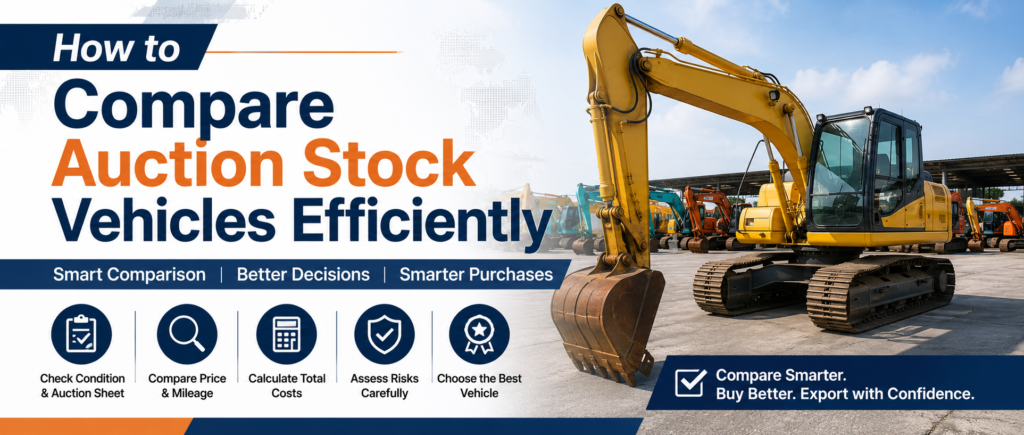
How to Compare Auction Stock Vehicles Efficiently
Search available auction vehicles here:
Browse Auction Vehicles
Introduction
Japanese auction stock gives overseas buyers access to many used vehicles from Japan. Buyers can find cars, trucks, buses, tractors, vans, and machinery through auction networks. However, because there are many choices, buyers need a clear way to compare vehicles efficiently.
If buyers only check the price, they may choose the wrong vehicle. A low price does not always mean good value. The vehicle condition, mileage, auction grade, repair history, shipping cost, and import rules are also important.
This guide explains how overseas buyers can compare auction stock vehicles from Japan in a smart and simple way. It also explains the Japanese auction system, buying flow, key risks, and why working with a professional export company is important.
How the Japanese Used Vehicle Auction System Works
Japanese used vehicle auctions are professional systems where vehicles are listed and sold through bidding. Auction houses across Japan list thousands of vehicles every week.
These vehicles may come from dealers, lease companies, rental companies, private owners, trade-ins, and business fleets. After inspection, each vehicle is listed with basic information, photos, and an auction sheet.
What Information Is Listed?
Auction stock listings usually include:
- Maker and model
- Year
- Mileage or hour meter
- Engine size
- Transmission type
- Fuel type
- Auction grade
- Condition comments
- Photos
- Repair history notes
This information helps buyers compare different vehicles before bidding.
What Is an Auction Sheet?
An auction sheet is an important document in Japanese auctions. It shows the vehicle condition in a simple format. It may show scratches, dents, rust, interior condition, accident history, and other notes.
For trucks, buses, tractors, and machinery, the auction sheet may also include engine notes, body condition, attachments, and working condition.
How Bidding Works
Most vehicles are sold by bidding. Buyers choose a maximum bid, and a Japanese export company places the bid on their behalf. If the bid is successful, the vehicle is purchased.
If the bid is not successful, buyers can continue searching and compare other vehicles.
Why Comparing Auction Stock Is Important
Japanese auction stock changes often. Many similar vehicles may appear in the same week. If buyers compare them correctly, they can find better value and reduce risk.
Good comparison helps buyers:
- Understand fair market price
- Avoid poor-condition vehicles
- Choose vehicles with better resale value
- Control total import cost
- Make faster buying decisions
For overseas buyers, efficient comparison is important because auction bidding moves quickly.
Benefits for Overseas Buyers
Large Vehicle Selection
Japanese auctions offer a wide range of vehicles. Buyers can compare many brands, models, grades, mileage levels, and prices.
This is useful for dealers, importers, farmers, transport companies, and business owners.
Competitive Prices
Auction stock can offer competitive prices because vehicles are sold through market bidding. Buyers can set their maximum budget before the auction.
This helps businesses control purchase costs and protect profit margins.
Access to Many Vehicle Types
Auction stock includes many vehicle types, such as:
- Passenger cars
- SUVs
- Vans
- Mini trucks
- Commercial trucks
- Buses
- Tractors
- Construction equipment
Better Buying Opportunities
Because new stock appears often, buyers can wait for better vehicles instead of rushing. Efficient comparison helps buyers know when a vehicle is a good opportunity.
Best Points to Compare Before Bidding
Compare Vehicle Purpose
First, compare vehicles based on purpose. A car for resale is different from a car for personal use. A truck for heavy work is different from a light delivery truck.
Before comparing price, decide the vehicle’s purpose:
- Personal use
- Resale business
- Taxi business
- Logistics
- Passenger transport
- Farming
- Construction
Compare Total Cost, Not Only Auction Price
The auction price is only one part of the full cost. Buyers should compare total cost before bidding.
Total cost may include:
- Auction price
- Exporter service fee
- Inland transport in Japan
- Port charges
- Shipping cost
- Inspection cost
- Customs duty
- Local tax
- Registration cost
A vehicle with a lower auction price may become expensive if shipping or repair costs are high.
Compare Mileage and Condition Together
Mileage is important, but it should not be checked alone. A low-mileage vehicle may still have damage or poor maintenance.
At the same time, a higher-mileage vehicle with good maintenance may be a better business choice.
Compare Auction Grade
Auction grade helps buyers understand vehicle condition quickly. However, auction grades can differ between auction houses.
Buyers should use the grade as a guide, not as the only decision point.
Compare Photos Carefully
Photos help buyers check the real appearance of the vehicle. Buyers should look carefully at:
- Front body
- Rear body
- Side panels
- Interior
- Tires
- Dashboard
- Engine area if available
- Rust or damage
Compare Repair History
Repair history is very important. Some vehicles may have accident repairs. Others may have minor panel repairs only.
Buyers should ask the export company to explain repair notes before bidding.
Step-by-Step Buying Flow
Step 1: Choose a Reliable Export Company
Most overseas buyers cannot access Japanese auction systems directly. A professional export company helps buyers search, compare, bid, and export vehicles.
Step 2: Share Your Buying Conditions
The buyer should share clear conditions with the exporter. This makes comparison easier.
- Vehicle type
- Brand and model
- Budget
- Destination country
- Year range
- Mileage range
- Transmission type
- Fuel type
Step 3: Search Auction Stock
The exporter searches available auction stock based on the buyer’s request. The buyer can then compare several vehicles.
Step 4: Check Auction Sheets
Before bidding, check the auction sheets and condition comments. If the comments are difficult to understand, ask the exporter for a simple explanation.
Step 5: Compare Total Cost
Before choosing one vehicle, compare total cost. Include the vehicle price, export charges, shipping, and local import costs.
Step 6: Set Your Maximum Bid
Set a maximum bid before the auction starts. This helps avoid overpaying.
Step 7: Bid and Arrange Export
If the bid is successful, the exporter arranges payment, inland transport, export documents, and shipping.
Important Points and Risks
Do Not Choose Only the Cheapest Vehicle
Cheap vehicles may have hidden risks. They may need repairs, parts replacement, or body work after arrival.
Always compare value, not only price.
Check Import Rules Before Bidding
Every country has different import rules. Some countries have age restrictions, emission rules, inspection rules, or document requirements.
Buyers should confirm local rules before bidding.
Check Parts Availability
Parts availability is important for long-term use and resale. Popular Japanese models often have better parts support in many countries.
Prepare a Repair Budget
Used vehicles may need service after arrival. Buyers should prepare a budget for oil, filters, tires, batteries, and small repairs.
Why Use a Professional Export Company?
Professional Auction Knowledge
A professional export company understands Japanese auction systems. They can read auction sheets, explain grades, and help buyers avoid risky vehicles.
Better Comparison Support
Exporters can compare similar vehicles and explain which one offers better value. This saves time for overseas buyers.
Export and Shipping Support
A professional exporter handles inland transport, export documents, port procedures, and shipping arrangements.
Clear Communication
Good communication is very important in international trade. Buyers need clear updates before and after purchase.
A reliable exporter supports buyers from vehicle search to shipping.
How EVERY TRADING Supports Overseas Buyers
EVERY TRADING is a Japanese used vehicle export company. We support customers around the world who want to buy vehicles from Japan.
Through Japanese auction vehicle search, buyers can compare cars, trucks, buses, tractors, machinery, and other vehicles from Japan auction stock.
Our team helps overseas buyers understand auction information, compare vehicles efficiently, and arrange export from Japan.
Conclusion
Comparing auction stock vehicles efficiently is one of the most important skills for buying from Japan. Buyers should compare price, mileage, condition, auction grade, photos, repair history, total cost, and import rules.
Japanese auction stock offers large selection and strong business opportunities. However, buyers need the right knowledge and professional support to reduce risk.
With a reliable Japanese export company, overseas buyers can search and compare auction vehicles more confidently and buy vehicles from Japan more smoothly.
Learn more about Japanese auctions:
Japanese Car Auction Guide
Start searching your vehicle from Japan today:
Search Auction Vehicles Now


Browse Reliable Used Trucks & Buses from Japan
Carefully selected vehicles ready for export worldwide
Search 100,000+ Dealer Stock Vehicles from Japan
Access a wide selection of vehicles from Japanese dealers nationwide. Updated daily.