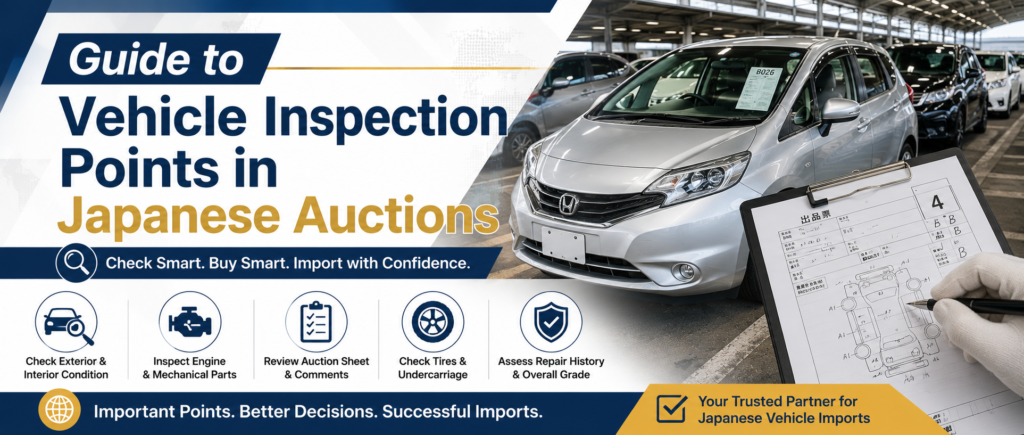
Guide to Vehicle Inspection Points in Japanese Auctions
Search available auction vehicles here:
Browse Auction Vehicles
Introduction
Japanese used vehicle auctions are one of the best sources for overseas buyers who want reliable vehicles from Japan. Every week, thousands of vehicles are listed in auction systems across the country.
Buyers can find passenger cars, SUVs, trucks, buses, tractors, vans, and commercial vehicles through these auctions. However, successful buying depends on understanding vehicle condition correctly.
Many overseas buyers focus only on price. This can create problems after import. A vehicle may look cheap at first, but repair costs, rust, accident history, or mechanical issues may increase the final cost.
This guide explains important vehicle inspection points in Japanese auctions. It also explains how Japanese auction systems work, the benefits for overseas buyers, the buying flow, risks to avoid, and why professional export companies are important.
How the Japanese Used Vehicle Auction System Works
Japanese used vehicle auctions are professional systems where vehicles are sold through bidding. Auction houses list vehicles from many sources such as dealers, lease companies, rental companies, private owners, and business fleets.
Before the auction starts, the vehicle is inspected and listed in the auction system with photos and an auction sheet.
What Information Is Included?
Auction listings usually include:
- Maker and model
- Year
- Mileage or hour meter
- Engine size
- Fuel type
- Transmission type
- Auction grade
- Repair history
- Condition notes
- Vehicle photos
This information helps buyers compare vehicles before bidding.
How Auction Sheets Work
Auction sheets are important because they explain the vehicle condition. Inspectors check the vehicle and write comments about scratches, dents, rust, interior wear, repairs, and mechanical condition.
The auction sheet is not a full guarantee, but it is a useful guide for buyers.
How Bidding Works
Vehicles are usually sold through bidding. Buyers decide a maximum bid amount before the auction starts.
Most overseas buyers use Japanese export companies to place bids on their behalf.
Why Vehicle Inspection Is Important
Vehicle inspection is one of the most important parts of buying from Japanese auctions. Buyers cannot usually touch or test the vehicle directly before purchase.
Because of this, buyers must carefully check auction sheets, photos, and condition comments.
Good inspection helps buyers:
- Avoid expensive repairs
- Reduce business risk
- Choose better resale vehicles
- Understand fair market value
- Improve customer satisfaction
For dealers and importers, correct inspection is very important because vehicle quality affects business reputation.
Benefits for Overseas Buyers
Large Selection of Vehicles
Japanese auction stock includes many vehicle types and brands. Buyers can compare thousands of vehicles every week.
This creates better opportunities for finding suitable units.
Competitive Prices
Auction systems allow buyers to purchase vehicles at market-based prices.
For overseas businesses, this can help improve profit margins.
Access to Japanese Vehicle Quality
Japanese vehicles are known for reliability and regular maintenance. Many owners follow scheduled inspections and servicing.
Because of this, Japanese auction stock often includes good-condition used vehicles.
Better Business Opportunities
Dealers and importers can use Japanese auctions to find vehicles that match local demand.
Popular export vehicles often include:
- Compact cars
- SUVs
- Hybrid cars
- Mini trucks
- Commercial trucks
- Tractors and machinery
Main Vehicle Inspection Points in Japanese Auctions
Check Auction Grade Carefully
Auction grade gives a quick overview of vehicle condition. Higher grades usually mean better condition.
However, buyers should not rely only on the grade. Different auction houses may use slightly different grading standards.
Always compare:
- Auction grade
- Photos
- Comments
- Repair history
- Mileage
Check Mileage or Hour Meter
Mileage is important because it helps estimate vehicle use. Lower mileage vehicles may have less wear.
However, mileage should not be checked alone. A well-maintained high-mileage vehicle may be better than a poorly maintained low-mileage vehicle.
For tractors and machinery, the hour meter is also important.
Inspect Exterior Condition
Exterior condition affects both resale value and repair cost.
Buyers should check:
- Scratches
- Dents
- Rust
- Paint condition
- Panel alignment
- Glass condition
- Lights
- Tire wear
Rust inspection is especially important for vehicles from snowy regions in Japan.
Inspect Interior Condition
The interior condition can show how carefully the previous owner used the vehicle.
Check:
- Seat condition
- Dashboard damage
- Steering wheel wear
- Floor condition
- Odor or smoke damage
- Air conditioning system
- Navigation system
Clean interiors are usually more attractive for resale.
Check Engine and Mechanical Notes
Mechanical condition is very important. Some auction sheets include notes about engine problems, oil leaks, transmission issues, or warning lights.
Buyers should pay attention to:
- Engine noise
- Oil leakage
- Transmission condition
- Suspension problems
- Battery condition
- Brake issues
- Warning lights
If the comments are difficult to understand, ask the exporter for explanation.
Check Repair History
Some vehicles may have repair history or accident history. Minor repairs may not be a serious problem, but heavy accident damage can reduce value and increase risk.
Buyers should confirm:
- Frame repair history
- Panel replacement
- Paint differences
- Structural damage
- Airbag deployment history
For resale businesses, accident history can affect customer trust and resale price.
Inspect Undercarriage Condition
The undercarriage is often ignored, but it is very important.
Buyers should check:
- Rust underneath
- Oil leaks
- Suspension damage
- Frame condition
- Exhaust condition
Vehicles used near coastal areas may have more corrosion risk.
Step-by-Step Buying Flow
Step 1: Choose a Reliable Export Company
Most overseas buyers use Japanese export companies because direct auction access is difficult.
A professional exporter helps buyers search, inspect, compare, bid, and arrange export.
Step 2: Decide Vehicle Requirements
Buyers should clearly explain:
- Vehicle type
- Budget
- Preferred brands
- Destination country
- Year range
- Mileage range
- Fuel type
Clear conditions help exporters find better vehicles.
Step 3: Search and Compare Auction Stock
The exporter searches available auction stock and provides suitable options.
Buyers should compare several vehicles instead of choosing only one unit immediately.
Step 4: Inspect Auction Information
Before bidding, buyers should inspect:
- Auction sheets
- Photos
- Repair history
- Mechanical notes
- Total expected cost
Step 5: Set the Maximum Bid
The buyer decides the maximum bid before the auction starts. This helps control total purchase cost.
Step 6: Bid and Arrange Export
If the bid wins, the exporter arranges inland transport, export documents, and shipping.
Shipping may be arranged by container or RoRo vessel depending on the vehicle type and destination.
Important Risks and Points to Watch
Do Not Focus Only on Price
Very cheap vehicles may have hidden problems. Buyers should focus on total value, not only auction price.
Understand Import Rules
Each country has different import rules. Some countries have:
- Age restrictions
- Inspection requirements
- Emission regulations
- Special document requirements
Buyers should confirm these rules before bidding.
Prepare for Maintenance Costs
Used vehicles may require service after arrival. Buyers should prepare a budget for:
- Oil changes
- Filters
- Tires
- Batteries
- Brake service
- Minor repairs
Check Parts Availability
Popular Japanese models usually have better parts availability in many countries.
Before buying rare models, buyers should confirm parts support locally.
Why Professional Export Companies Are Important
Professional Auction Knowledge
Experienced exporters understand auction systems, auction grades, and inspection comments.
They can help buyers avoid risky vehicles.
Better Inspection Support
Export companies can explain auction sheets in simple English and compare vehicle conditions more clearly.
Export and Shipping Support
A professional exporter handles:
- Inland transport
- Export documents
- Port procedures
- Shipping arrangements
- Customer communication
Long-Term Business Support
For dealers and importers, a trusted exporter becomes a long-term business partner.
Strong communication and reliable support help build stable import businesses.
How EVERY TRADING Supports Overseas Buyers
EVERY TRADING is a Japanese used vehicle export company that supports customers around the world.
We help overseas buyers search Japanese auction stock and understand important inspection points before bidding.
Our team supports vehicle search, auction explanation, export documents, and international shipping from Japan.
Conclusion
Understanding vehicle inspection points is very important when buying from Japanese auctions. Buyers should carefully check auction grades, mileage, photos, repair history, rust, mechanical notes, and total cost before bidding.
Japanese auction stock offers many opportunities for overseas buyers, but correct inspection helps reduce risk and improve buying quality.
With professional support from a trusted export company, buyers can purchase Japanese auction vehicles more safely and confidently.
Learn more about Japanese auctions:
Japanese Car Auction Guide
Start searching your vehicle from Japan today:
Search Auction Vehicles Now


Browse Reliable Used Trucks & Buses from Japan
Carefully selected vehicles ready for export worldwide
Search 100,000+ Dealer Stock Vehicles from Japan
Access a wide selection of vehicles from Japanese dealers nationwide. Updated daily.