Bus Maintenance Tips After Importing from Japan
Bus Maintenance Tips After Importing from Japan are important for importers, dealers, and transport businesses that want long-term performance. Japanese buses are trusted for comfort, durability, and reliable operation, but proper maintenance after arrival is essential.
Used buses from Japan are widely used in Africa, the Caribbean, Asia, and many other markets. They support tourism, school transport, company shuttles, and public passenger services. To protect your investment, buyers should check key parts and create a regular maintenance plan.
Many buyers first review the Japanese dealer stock vehicles guide to understand how to source reliable buses from Japan with speed, trust, and simplicity.
Check the Bus Immediately After Arrival
The first step after importing a bus from Japan is a full arrival inspection. Check the exterior, interior, engine, tires, lights, brakes, and battery. This helps confirm the condition before the bus starts daily operation.
During shipping, vehicles may stay at ports or on vessels for several weeks. Because of this, the battery, fluids, and tires should be checked carefully. Small problems can become larger if ignored.
Buyers should also compare the arrived condition with the photos and documents received before shipment. This helps confirm that everything is correct.
When buyers use Japanese dealer stock vehicles, they can review clear details before purchase. This makes the arrival check easier and more reliable.
Maintain Engine, Fluids, and Cooling System
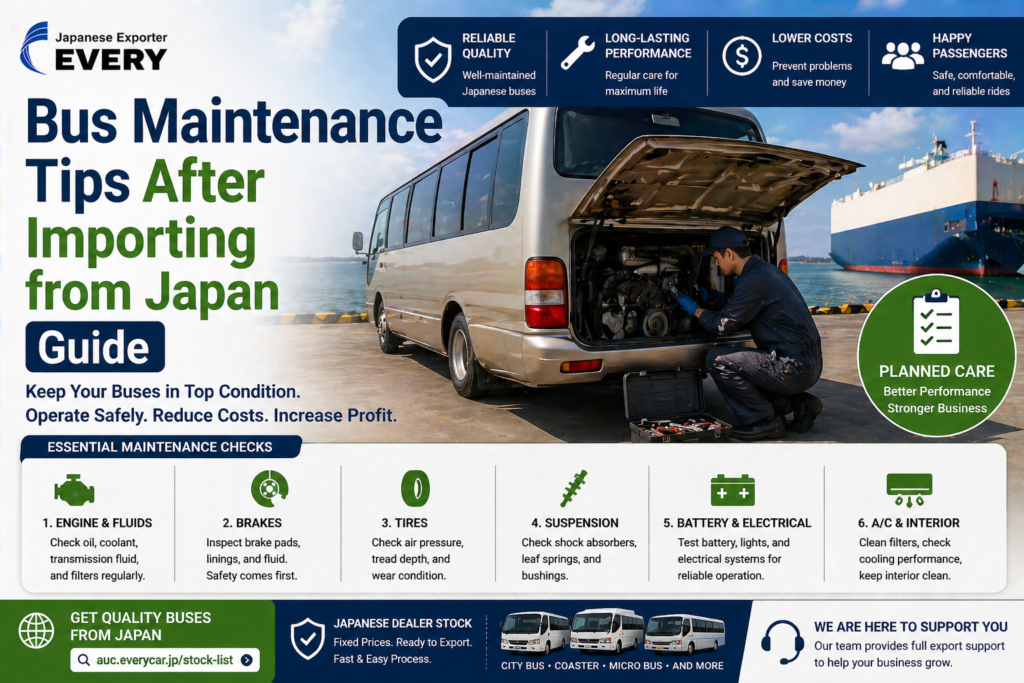
The engine is the most important part of any bus. After arrival, check engine oil, coolant, transmission fluid, brake fluid, and power steering fluid. Replace fluids if needed before regular use.
Buses often operate for long hours, so engine maintenance must be consistent. Regular oil changes and filter replacements help extend engine life and reduce breakdowns.
The cooling system is also very important, especially in hot climates. Check the radiator, coolant level, hoses, and fan operation. Overheating can cause serious engine damage.
For transport businesses, reliable engine performance means fewer delays and better customer service.
Inspect Brakes, Tires, and Suspension
Passenger safety must always come first. Brakes should be checked immediately after import. Inspect brake pads, drums, discs, air systems, and brake fluid condition.
Tires are also critical. Check tire age, tread depth, air pressure, and sidewall condition. Buses carry many passengers, so weak tires can create serious safety risks.
Suspension parts should also be inspected. Worn suspension can reduce comfort and affect vehicle control. This is especially important for rough roads or long-distance routes.
Many importers use used vehicles from Japan dealer stock because they want buses with clear condition details and ready-to-export availability.
Create a Regular Maintenance Schedule
After the first inspection, buyers should create a maintenance schedule. This should include daily checks, weekly checks, and monthly service. A simple checklist can help drivers and mechanics find issues early.
Daily checks may include engine oil, coolant, lights, brakes, tires, and air conditioning. Weekly checks can include belts, hoses, battery, and underbody condition.
For tourism and transport businesses, air conditioning and interior condition are also important. Passengers expect clean seats, working air conditioning, and a comfortable ride.
A good maintenance plan reduces downtime and improves profit. It also helps build trust with passengers and customers.
Conclusion
Bus Maintenance Tips After Importing from Japan help buyers protect their investment and keep vehicles working for many years. Japanese buses are reliable, but regular inspection and service are essential after arrival.
Dealer stock makes buying faster and simpler because vehicles are ready to purchase, prices are fixed, and export can move quickly. This gives buyers more confidence before the bus reaches their country.
For importers, dealers, and transport companies, the best strategy is to buy from a trusted exporter and maintain the bus properly after arrival. With support from EVERY, buyers can source reliable buses and build a stronger transport business.


Browse Reliable Used Trucks & Buses from Japan
Carefully selected vehicles ready for export worldwide
Search 100,000+ Dealer Stock Vehicles from Japan
Access a wide selection of vehicles from Japanese dealers nationwide. Updated daily.