
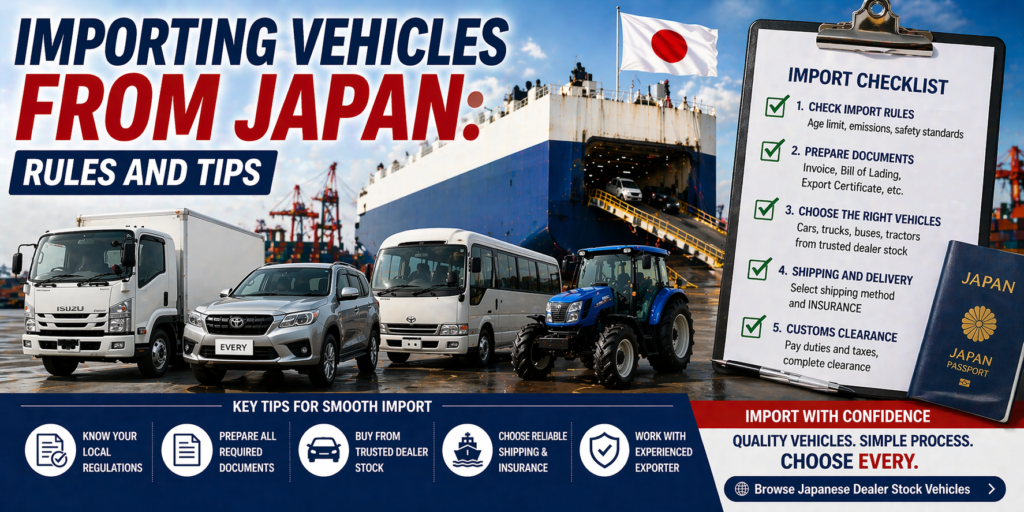
Importing Vehicles from Japan: Rules and Tips
Importing Vehicles from Japan: Rules and Tips is important for any buyer who wants to build a strong vehicle business. Japan is known for high-quality cars, trucks, buses, and tractors. Many importers choose Japan because of reliability, good condition, and long service life.
However, importing is not only about choosing a vehicle. You must understand rules, documents, and the process. Without clear knowledge, you may face delays, extra costs, or problems at customs.
This guide explains simple rules and useful tips. It also shows how dealer stock helps you import faster, with less risk and more confidence.
1. Know the Import Rules in Your Country
The first step in Importing Vehicles from Japan: Rules and Tips is to check your country’s import rules. Each country has different requirements. You must confirm them before you buy.
Common rules include:
- Vehicle age limits
- Emission standards
- Right-hand or left-hand drive regulations
- Import duties and taxes
If you ignore these rules, your vehicle may not be allowed into your country. This can cause loss and delay.
Many buyers use Japanese dealer stock vehicles because specifications are clearly listed. This helps you quickly check if the vehicle meets your local rules.
This approach works for all vehicles, including tractors and heavy machinery.
2. Prepare All Required Documents
Documents are very important when importing vehicles from Japan. Without correct documents, your shipment may be delayed or stopped.
Basic documents include:
- Commercial invoice
- Bill of lading
- Export certificate
- Packing list
- Inspection certificate (if required)
A trusted exporter will prepare these documents for you. This makes the process simple and reduces mistakes.
When you buy from used vehicles from Japan dealer stock, the process is faster. The vehicle is already ready, so documents can be prepared immediately after purchase.
This speed is important for business buyers who need quick delivery.
3. Choose the Right Buying Method
Another key point in Importing Vehicles from Japan: Rules and Tips is choosing how you buy. The two main options are dealer stock and auctions.
Dealer stock offers:
- Immediate purchase
- Fixed price
- No bidding
- Fast export process
Auctions offer:
- Large number of vehicles
- Bidding system
- Uncertain final price
- Waiting time
For most business buyers, dealer stock is better. It saves time and reduces risk. You can select the vehicle and proceed quickly without waiting.
This is especially useful when customers need vehicles urgently. It helps you respond faster and improve your service.
4. Plan Shipping and Delivery Carefully
Shipping is the final step in importing vehicles from Japan. You must plan this step carefully to avoid delays.
Important points include:
- Choose the right shipping method (RoRo or container)
- Check shipping schedules
- Confirm insurance options
- Prepare for customs clearance
Dealer stock vehicles are ready for export. This means shipping can start quickly after payment. This reduces waiting time compared to auction purchases.
To learn more about the full process, visit the Japanese dealer stock vehicles guide.
Working with an experienced exporter ensures smooth shipping and delivery. This is important for building trust with your customers.
Conclusion
Importing Vehicles from Japan: Rules and Tips shows that success depends on preparation and the right strategy. You must understand rules, prepare documents, and choose the best buying method.
Dealer stock is the best option for many buyers. It offers immediate purchase, fixed pricing, and fast export. This makes the process simple and reliable.
EVERY supports global buyers with professional export services. Whether you need cars, trucks, buses, or tractors, Japan offers strong opportunities. With the right approach, you can import with speed, trust, and confidence.


Browse Reliable Used Trucks & Buses from Japan
Carefully selected vehicles ready for export worldwide
Search 100,000+ Dealer Stock Vehicles from Japan
Access a wide selection of vehicles from Japanese dealers nationwide. Updated daily.