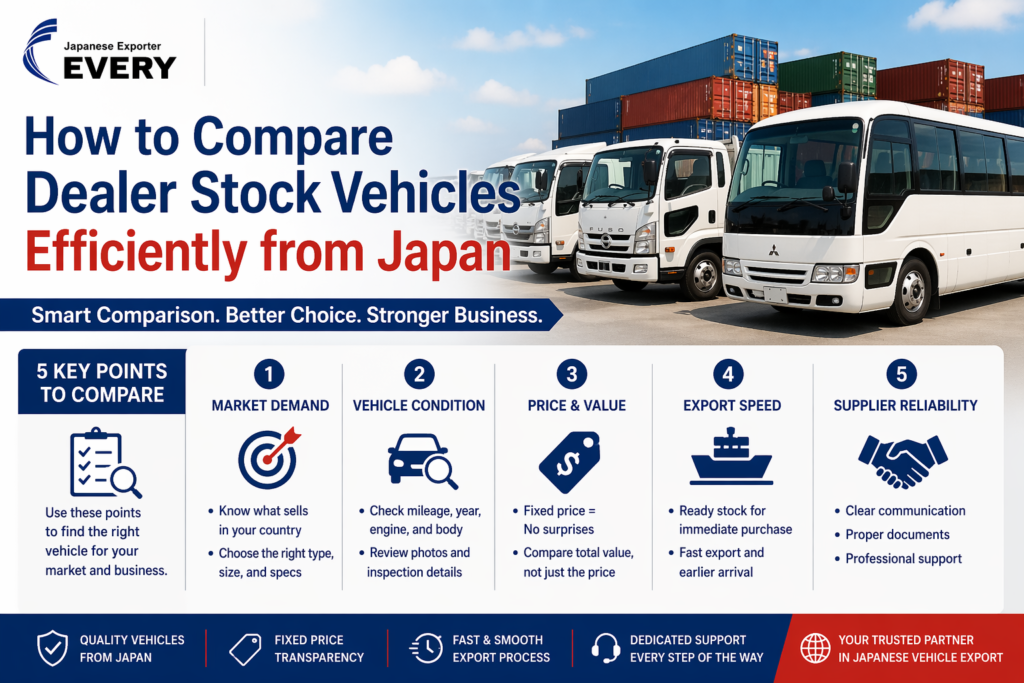
How to Compare Dealer Stock Vehicles Efficiently
Understanding how to compare dealer stock vehicles efficiently is essential for overseas buyers who want to import from Japan. A smart comparison helps you save time, reduce risk, and choose the best vehicle for your business.
Japan offers a wide range of cars, trucks, buses, and even tractors through dealer stock. However, many options can also make the decision difficult. Without a clear method, buyers may choose the wrong vehicle or miss better opportunities.
Dealer stock makes the process easier. Vehicles are already available, prices are fixed, and export can start quickly. This allows buyers to focus on comparing value instead of dealing with auction complexity.
Focus on Market Demand First
The first step in how to compare dealer stock vehicles efficiently is understanding your market. You should know what type of vehicles are popular in your country.
Some markets prefer small fuel-efficient cars. Others need strong trucks for business use or buses for transport services. In some regions, tractors are also in high demand.
When you check Japanese dealer stock vehicles, do not compare everything at once. Focus only on vehicles that match your business needs.
This approach saves time and improves decision quality. Instead of looking at hundreds of units, you compare only the most relevant options.
Compare Condition, Mileage, and Specifications
After narrowing your options, the next step is comparing vehicle condition. This is one of the most important parts of the process.
You should check model year, mileage, engine condition, transmission type, and overall body condition. For commercial vehicles, also check load capacity and usage history.
Dealer stock is useful because exporters can provide clear information. You can ask questions and confirm details before making a decision.
When reviewing used vehicles from Japan dealer stock, compare vehicles side by side. Look for balance between condition and price, not just the lowest cost.
A well-maintained vehicle with slightly higher mileage can sometimes be a better choice than a cheaper unit with hidden issues.
Evaluate Price and Total Business Value
Price comparison is important, but it should not be the only factor. Efficient comparison means understanding total business value.
Dealer stock vehicles have fixed prices. This gives buyers a clear advantage. You can calculate total cost, including shipping and import expenses, before buying.
In auctions, prices change quickly. This makes comparison more difficult. Dealer stock removes this problem and allows stable decision-making.
Think about resale value, maintenance cost, and demand in your market. A vehicle that sells faster can be more profitable even if the purchase price is higher.
Efficient buyers always compare value, not just price.
Consider Export Speed and Supplier Reliability
Another key factor in how to compare dealer stock vehicles efficiently is export speed. A good vehicle is not useful if it takes too long to arrive.
Dealer stock allows immediate purchase. Since the vehicle is already secured, export preparation can start right away. This is very important for business operations.
Fast export means faster sales and better cash flow. It also helps you respond to customer demand quickly.
You should also compare exporters. A reliable supplier provides clear communication, correct documents, and professional support.
If you want to understand more about this system, you can check this Japanese dealer stock vehicles guide. It explains how dealer stock works for global buyers.
Choosing the right partner is just as important as choosing the right vehicle.
Conclusion
This guide on how to compare dealer stock vehicles efficiently shows that smart comparison is the key to successful importing. By focusing on market demand, checking condition, comparing value, and considering export speed, buyers can make better decisions.
Dealer stock offers major advantages. It provides immediate availability, fixed pricing, and a simple process. This makes comparison easier than auction systems.
For overseas buyers importing cars, trucks, buses, or tractors from Japan, efficient comparison leads to better results. With the right strategy and a trusted exporter, you can grow your business with confidence.


Browse Reliable Used Trucks & Buses from Japan
Carefully selected vehicles ready for export worldwide
Search 100,000+ Dealer Stock Vehicles from Japan
Access a wide selection of vehicles from Japanese dealers nationwide. Updated daily.