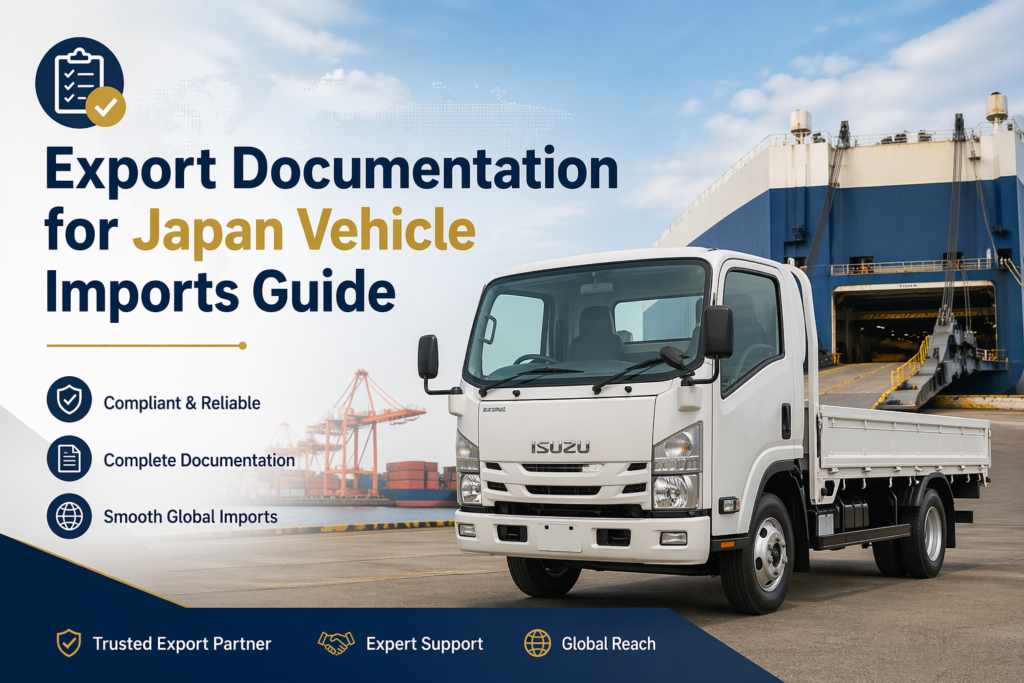
Export Documentation for Japan Vehicle Imports
Export documentation for Japan vehicle imports is one of the most important parts of the buying process. Even if you choose the right vehicle, the import can face delays if the documents are not correct.
For overseas buyers in Africa, the Caribbean, Asia, and other markets, clear paperwork is essential. It helps with customs clearance, shipping, payment confirmation, and local registration after arrival.
This is one reason why dealer stock is a smart choice. Dealer stock vehicles are already available, prices are fixed, and the export process can start quickly. With the right exporter, buyers can enjoy more speed, more trust, and a simpler import experience.
Why Export Documents Matter in Vehicle Imports
When importing from Japan, documents are not just formal papers. They are the proof of the transaction, the shipment, and the vehicle details. Without them, the buyer cannot complete customs clearance smoothly.
Good documentation protects both the buyer and the exporter. It confirms what vehicle was purchased, how much was paid, and when the shipment was arranged. This is very important for business buyers who need clean and professional transactions.
Many importers begin by searching Japanese dealer stock vehicles because the process is easier to manage. Since the vehicle is already secured, the exporter can move quickly to prepare the required papers.
This is a major advantage compared with auctions. In auction buying, buyers often spend more time waiting, bidding, and confirming final results. Dealer stock simplifies the process and allows faster preparation for export documentation.
Main Export Documents You Should Know
There are several important documents in Japan vehicle exports. The first is the commercial invoice. This document shows the seller, the buyer, the vehicle details, and the total amount paid.
Another important document is the Bill of Lading. This is issued for shipping and proves that the vehicle has been loaded for transport. Buyers need this document to claim the vehicle after arrival.
The export certificate is also essential. It confirms that the vehicle has been officially exported from Japan. In many countries, this document is required for customs clearance and registration.
Depending on the destination, there may also be inspection documents, packing lists, insurance papers, or other country-specific requirements. This is why buyers should always confirm the full document list before shipment.
When reviewing used vehicles from Japan dealer stock, it is helpful to work with an exporter that can explain all document requirements clearly. Good communication reduces mistakes and saves time.
How Dealer Stock Makes Documentation Easier
Dealer stock offers a big advantage when it comes to export paperwork. Because the vehicle is already available, the exporter can prepare the documents without delay after payment confirmation.
This creates a faster workflow. The buyer selects the vehicle, confirms the fixed price, receives the invoice, makes payment, and then moves directly to export preparation. The process is simple and easy to understand.
Fixed pricing also supports better documentation. Since there is no bidding change, the invoice and payment records stay clear. This helps buyers calculate costs and keeps the import process transparent.
For business buyers, speed matters. Fast documentation means faster shipping, earlier customs processing, and quicker delivery to the market. This is important whether you are importing cars, trucks, buses, or tractors.
Dealer stock is especially useful for buyers who want stability. Instead of dealing with auction uncertainty, they can focus on accurate documents and efficient export steps.
How to Avoid Common Documentation Problems
One common problem in vehicle imports is missing or incorrect information. Even a small mistake in the vehicle number, buyer name, or shipment details can create delays.
To avoid this, buyers should confirm all important details before export. Check the invoice carefully. Confirm the consignee name, destination port, vehicle model, chassis number, and payment amount. These simple checks can prevent bigger issues later.
It is also important to understand the rules in your own country. Some countries require special inspections or extra import papers before the vehicle arrives. Buyers should confirm this early and share the information with the exporter.
A trusted exporter makes this process much easier. Good exporters provide clear answers, correct documents, and support at each step. This helps buyers avoid confusion and move with confidence.
If you want to understand the dealer stock system more clearly, you can read this Japanese dealer stock vehicles guide. It explains how direct purchasing from Japan works and why many global buyers prefer this method.
Strong documentation is not only about customs. It also builds trust between the buyer and the exporter. Clean paperwork shows professionalism and supports long-term business relationships.
Conclusion
This guide to export documentation for Japan vehicle imports shows why paperwork is a key part of successful importing. Accurate documents help buyers clear customs, receive vehicles smoothly, and avoid unnecessary delays.
Dealer stock makes the process easier by offering immediate purchase, fixed pricing, and faster export preparation. This supports clear documentation and a simpler transaction flow.
For overseas buyers importing cars, trucks, buses, or tractors from Japan, correct export documents are essential. With a trusted exporter and a simple dealer stock process, you can import with more speed, more trust, and better business results.


Browse Reliable Used Trucks & Buses from Japan
Carefully selected vehicles ready for export worldwide
Search 100,000+ Dealer Stock Vehicles from Japan
Access a wide selection of vehicles from Japanese dealers nationwide. Updated daily.