
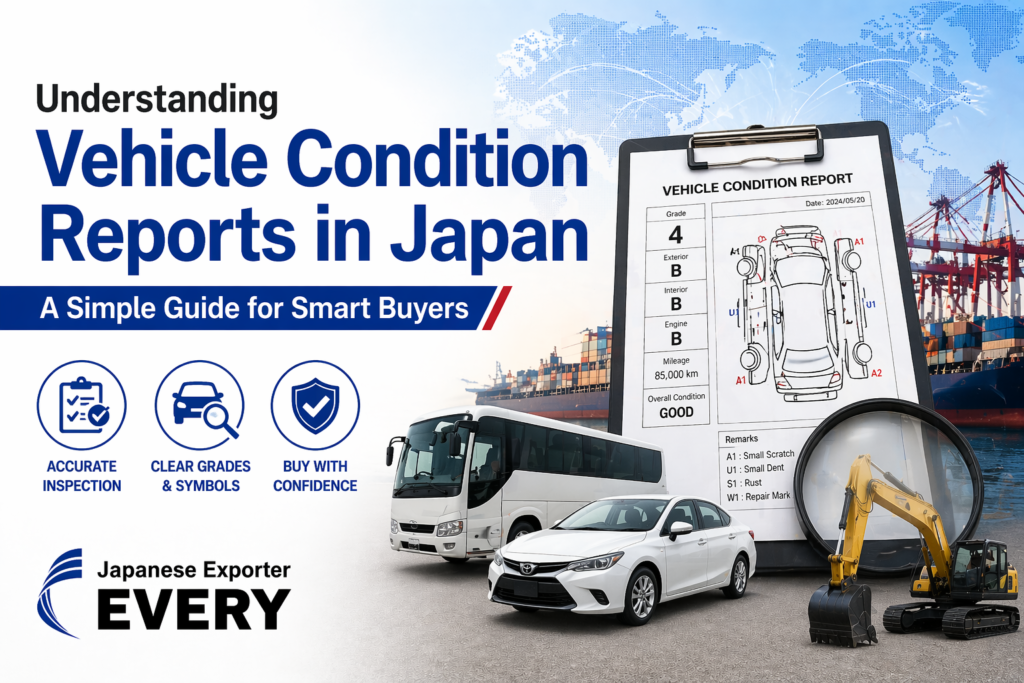
Understanding Vehicle Condition Reports in Japan
Understanding Vehicle Condition Reports in Japan is very important for buyers who import cars, trucks, buses, and even tractors. These reports help you check the real condition of a vehicle before you buy it. For overseas buyers, this information reduces risk and improves decision-making.
Many importers worry about buying vehicles without seeing them in person. This is common when buying from Japan. However, condition reports give clear details about the vehicle’s status, damage, and overall quality.
In this guide, we explain how to read and use vehicle condition reports. We also show how dealer stock vehicles make the process easier, faster, and more reliable.
1. What Is a Vehicle Condition Report?
A vehicle condition report is a document that shows the condition of a used vehicle. It is usually prepared by professional inspectors in Japan. These reports are common in auctions, but they are also useful for dealer stock vehicles.
The report includes key details such as:
- Exterior condition (scratches, dents, rust)
- Interior condition (seats, dashboard, cleanliness)
- Engine and mechanical condition
- Mileage and usage history
- Overall grade or rating
For tractors and heavy machinery, reports may also include engine hours, hydraulic condition, and working performance.
When you browse Japanese dealer stock vehicles, many units come with clear condition details. This helps buyers understand what they are purchasing.
A good condition report builds trust. It allows buyers to make safe and informed decisions without physical inspection.
2. How to Read Condition Grades and Symbols
Understanding grades is the key to using vehicle condition reports in Japan. Most reports use a grading system to show overall quality.
Common grades include:
- S: Almost new condition
- 6 or 5: Excellent condition
- 4: Good condition with minor wear
- 3: Average condition with visible wear
- R or RA: Accident history
Inspectors also use symbols to show damage. For example:
- A: Scratch
- U: Dent
- W: Wave or repair mark
- S: Rust
- C: Corrosion
These marks are often shown on a vehicle diagram. This makes it easy to understand where damage exists.
Dealer stock vehicles usually provide clear and simple condition information. Buyers who prefer used vehicles from Japan dealer stock can avoid complex grading systems and focus on ready-to-buy units.
Compared to auctions, dealer stock is simpler and easier to understand.
3. Why Condition Reports Matter for Overseas Buyers
Condition reports are very important for overseas buyers. You cannot always inspect vehicles in person. You must rely on accurate information.
A good report helps you:
- Reduce purchase risk
- Understand repair costs
- Compare multiple vehicles
- Make faster decisions
This is especially important for business buyers. Dealers and importers must maintain quality to satisfy their customers.
For tractors and heavy equipment, condition reports also help confirm working condition. This is important for farming and construction use.
Dealer stock vehicles add another advantage. Because they are already selected and prepared, the risk is lower. You get speed, trust, and simplicity.
4. Dealer Stock vs Auction: Which Is Easier?
Auction vehicles often have detailed condition reports. However, the process can be complex. Buyers must read reports, wait for auctions, and compete with others.
Dealer stock vehicles offer a simpler option:
- Immediate purchase
- Fixed pricing
- Clear condition information
- No waiting or bidding
This makes dealer stock ideal for buyers who want speed and reliability.
To learn more about the full process, visit the Japanese dealer stock vehicles guide. It explains each step clearly.
Many professional importers now prefer dealer stock because it reduces complexity and improves efficiency.
Conclusion
Understanding Vehicle Condition Reports in Japan is essential for safe and successful vehicle import. These reports help buyers evaluate cars, trucks, buses, and tractors before purchase.
However, reading reports can take time and experience. That is why many buyers choose dealer stock vehicles. They offer clear information, immediate purchase, and fast export.
EVERY supports global buyers with reliable information and professional service. With the right knowledge and trusted partner, you can import vehicles from Japan with confidence, speed, and simplicity.


Browse Reliable Used Trucks & Buses from Japan
Carefully selected vehicles ready for export worldwide
Search 100,000+ Dealer Stock Vehicles from Japan
Access a wide selection of vehicles from Japanese dealers nationwide. Updated daily.