Shipping Auction Stock Vehicles from Japan Explained
Search available auction vehicles here:
Browse Auction Vehicles
Introduction
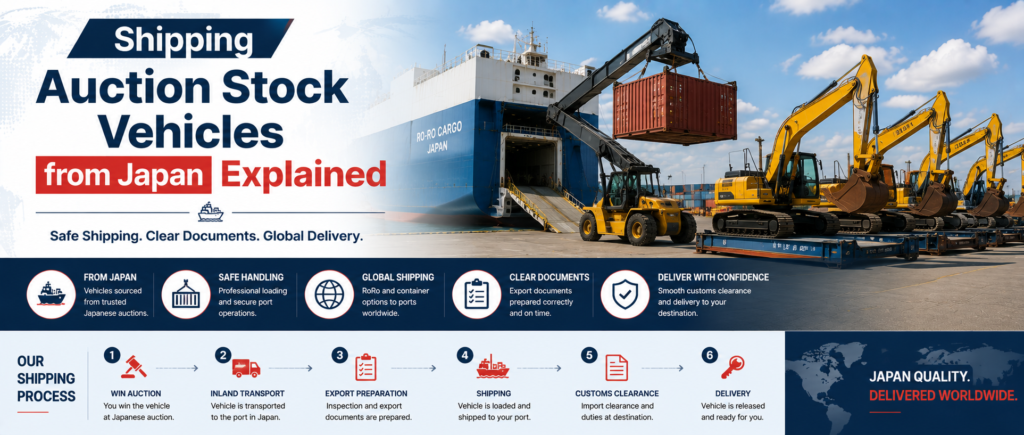
Shipping is one of the most important steps when buying auction stock vehicles from Japan. After a buyer wins a vehicle at auction, the vehicle must be transported from the auction site to a Japanese port, prepared for export, and shipped to the destination country.
Japanese auction stock includes cars, trucks, buses, vans, tractors, construction machinery, and other commercial vehicles. Each vehicle type may need a different shipping plan.
For overseas buyers, understanding shipping helps reduce delays, control costs, and avoid import problems.
This guide explains how shipping auction stock vehicles from Japan works. It also explains the Japanese auction system, buyer benefits, buying flow, important risks, and why professional export support is important.
How Japanese Auction Stock Works
Japanese used vehicle auctions are professional systems where vehicles are sold through bidding. Auction houses across Japan list many vehicles every week.
Vehicles may come from dealers, lease companies, rental fleets, business fleets, private owners, and trade-ins.
Vehicle Types Available in Auction Stock
- Passenger cars
- SUVs
- Commercial vans
- Light trucks
- Heavy-duty trucks
- Buses and minibuses
- Tractors
- Construction machinery
- Special-purpose vehicles
Auction Sheets and Vehicle Information
Most auction vehicles include auction sheets. These sheets help buyers understand vehicle condition before bidding.
Auction sheets may include mileage, auction grade, repair history, rust notes, exterior damage, interior condition, mechanical comments, and equipment details.
Bidding and Purchase
Overseas buyers usually work with a Japanese export company. The exporter places bids on behalf of the buyer.
If the bid wins, the vehicle is purchased. After purchase, the shipping process begins.
Why Shipping Planning Is Important
Shipping affects total cost, delivery time, and import planning. A good shipping plan helps buyers prepare documents, customs clearance, and local delivery in advance.
Shipping planning helps buyers:
- Understand total import cost
- Avoid port delays
- Choose the right shipping method
- Prepare documents correctly
- Plan resale or business use
- Reduce import risk
Main Shipping Methods from Japan
RoRo Shipping
RoRo means Roll-on/Roll-off. Vehicles are driven onto the vessel in Japan and driven off at the destination port.
RoRo shipping is commonly used for cars, vans, trucks, buses, tractors, and machinery that can move by themselves.
Container Shipping
Container shipping is used for smaller vehicles, parts, non-running vehicles, or shipments that require enclosed transport.
Some buyers choose container shipping when they ship multiple small units or want extra protection.
Special Shipping for Large Vehicles
Large machinery, oversized trucks, and special-purpose vehicles may need special shipping arrangements.
This may include flat rack containers, special loading, or direct port handling.
Step-by-Step Shipping Flow
Step 1: Win the Auction
The shipping process starts after the buyer wins the auction. The exporter confirms the purchase and begins the next steps.
Step 2: Arrange Inland Transport in Japan
The vehicle must move from the auction site to the export yard or port.
Inland transport cost depends on the auction location, vehicle size, condition, and destination port in Japan.
Step 3: Check Vehicle Condition After Purchase
The exporter may check the vehicle after it arrives at the yard or port area. This helps confirm the vehicle before export.
Step 4: Prepare Export Documents
Important export documents must be prepared before shipping.
- Commercial invoice
- Export certificate
- Bill of lading
- Inspection certificate if required
- Other country-specific documents
Step 5: Book Shipping Space
The exporter books vessel space based on the vehicle type, size, destination country, and shipping schedule.
Step 6: Load the Vehicle
The vehicle is loaded onto the vessel at a Japanese port. For RoRo shipping, the vehicle is driven onto the ship.
Step 7: Receive Shipping Documents
After the vessel departs, shipping documents are prepared. The bill of lading is one of the most important documents for customs clearance.
Step 8: Customs Clearance at Destination
When the vehicle arrives, the buyer or local agent handles customs clearance, import duty, port charges, and local registration.
Important Shipping Documents
Commercial Invoice
The commercial invoice shows the vehicle price, buyer, seller, and transaction details.
Export Certificate
The export certificate proves that the vehicle has been prepared for export from Japan.
Bill of Lading
The bill of lading shows vessel details, loading port, destination port, consignee, and vehicle information.
Inspection Certificate
Some countries require vehicle inspection before export. Buyers should confirm this rule before bidding.
Shipping Cost Factors
Vehicle Size
Large vehicles usually cost more to ship. Trucks, buses, tractors, and machinery may cost more than passenger cars.
Destination Port
Shipping costs differ by country and port. Some routes have frequent vessels, while others may have fewer schedules.
Shipping Method
RoRo and container shipping have different costs. The best method depends on vehicle type, quantity, and destination.
Vehicle Condition
Non-running vehicles may need special handling. This can increase cost and delay shipping.
Benefits of Using Japanese Auction Stock
Wide Vehicle Selection
Japanese auction stock gives buyers access to many vehicles from different auction networks.
Reliable Japanese Brands
Japanese brands are trusted worldwide for durability, quality, and practical use.
Useful for Business Buyers
Auction stock supports dealers, logistics companies, construction businesses, farmers, tourism businesses, and fleet buyers.
Flexible Sourcing
Buyers can search many vehicle types and choose units that match their country, budget, and business purpose.
Common Shipping Risks to Avoid
Forgetting Shipping Cost Before Bidding
The auction price is not the final cost. Buyers should confirm estimated shipping cost before bidding.
Choosing the Wrong Shipping Method
Some vehicles are better for RoRo shipping, while others may need container or special shipping.
Ignoring Destination Import Rules
Each country has different import rules. Buyers should confirm age limits, inspection rules, taxes, and required documents before purchase.
Document Mistakes
Incorrect buyer name, port name, or vehicle details can delay customs clearance.
Shipping Schedule Changes
Vessel schedules may change due to port congestion, weather, or shipping company reasons. Buyers should plan with some time flexibility.
Why Professional Export Companies Are Important
Shipping Knowledge
Professional exporters understand shipping routes, port procedures, vessel schedules, and vehicle loading requirements.
Document Support
Experienced exporters prepare export documents and shipping documents correctly.
Cost Calculation Support
A professional exporter helps buyers understand Japan-side costs, shipping costs, and total import cost before bidding.
Risk Reduction
Professional support helps buyers avoid shipping delays, document mistakes, wrong port selection, and unexpected costs.
How EVERY TRADING Supports Shipping from Japan
EVERY TRADING is a Japanese used vehicle export company. We support customers around the world who want to buy and ship vehicles from Japan.
Through Japanese auction vehicle search, overseas buyers can find cars, trucks, buses, tractors, machinery, vans, and many other vehicles from Japan auction stock.
Our team helps buyers search vehicles, understand auction sheets, calculate costs, arrange inland transport, prepare documents, book shipping, and export vehicles from Japan safely and smoothly.
Conclusion
Shipping auction stock vehicles from Japan requires planning and professional support. Buyers must understand inland transport, shipping methods, export documents, vessel schedules, port procedures, and customs clearance.
Japanese auction stock offers many good opportunities, but shipping cost and documentation must be checked before bidding.
With professional export support, overseas buyers can reduce risk and ship auction vehicles from Japan with more confidence.
Learn more about Japanese auctions:
Japanese Car Auction Guide
Start searching your vehicle from Japan today:
Search Auction Vehicles Now


Browse Reliable Used Trucks & Buses from Japan
Carefully selected vehicles ready for export worldwide
Search 100,000+ Dealer Stock Vehicles from Japan
Access a wide selection of vehicles from Japanese dealers nationwide. Updated daily.