
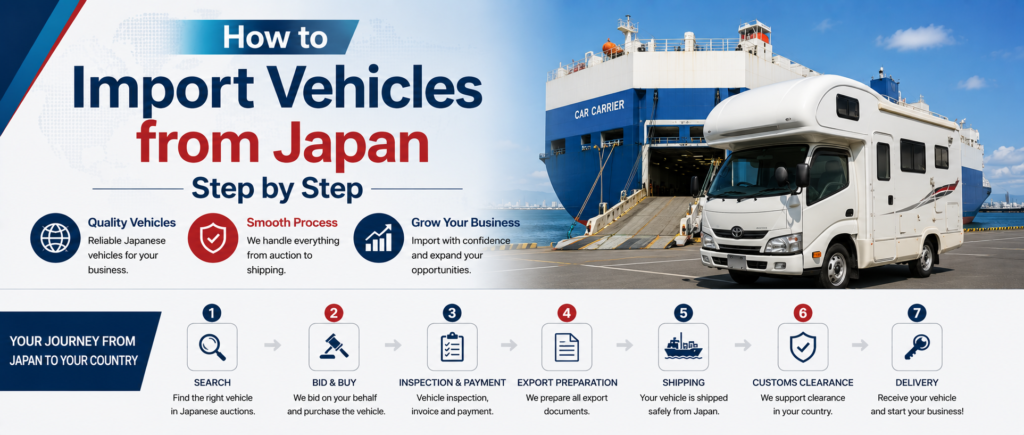
How to Import Vehicles from Japan Step by Step
Search available auction vehicles here:
Browse Auction Vehicles
Introduction
Importing vehicles from Japan can be a strong opportunity for overseas buyers. Japan offers many used cars, trucks, buses, vans, tractors, machinery, and commercial vehicles through auction stock.
Japanese vehicles are trusted in many countries because they are reliable, practical, and often well maintained. However, importing from Japan requires a clear process. Buyers must understand vehicle search, auction sheets, bidding, payment, export documents, shipping, and customs clearance.
This step-by-step guide explains how to import vehicles from Japan through auction stock. It is written for overseas buyers, dealers, import businesses, fleet buyers, transport companies, farmers, and construction businesses.
How Japanese Used Vehicle Auctions Work
Japanese used vehicle auctions are professional systems where vehicles are sold through bidding. Auction houses across Japan list many vehicles every week.
Vehicles may come from dealers, lease companies, rental fleets, business fleets, private owners, and trade-ins.
What Buyers Can Find in Japanese Auction Stock
Japanese auction stock includes many vehicle types.
- Compact cars
- Sedans
- SUVs
- Hybrid vehicles
- Commercial vans
- Light trucks
- Heavy-duty trucks
- Buses and minibuses
- Tractors
- Construction machinery
Auction Sheets and Vehicle Information
Most auction vehicles include auction sheets. These sheets help buyers understand vehicle condition before bidding.
Auction sheets may include mileage, auction grade, repair history, rust notes, exterior damage, interior condition, mechanical comments, and equipment details.
Bidding System
Most vehicles are sold by bidding. Overseas buyers usually work with a Japanese export company that places bids on their behalf.
The buyer sets a maximum bid. If the bid wins, the vehicle is purchased. If not, the buyer can continue searching for another suitable unit.
Benefits of Importing Vehicles from Japan
Wide Vehicle Selection
Japan auction stock gives buyers access to many vehicles from different auction networks across Japan.
Reliable Japanese Brands
Popular Japanese brands include Toyota, Nissan, Honda, Mazda, Suzuki, Mitsubishi, Isuzu, Hino, UD Trucks, Kubota, Yanmar, and Iseki.
Useful for Many Businesses
Japanese auction stock supports many business needs.
- Used vehicle resale
- Taxi business
- Tourism transport
- Logistics
- Construction
- Agriculture
- Fleet expansion
Market-Based Pricing
Auction prices change based on demand, condition, timing, and competition. This helps buyers compare real market prices before purchasing.
Step 1: Choose a Reliable Japanese Export Company
Most overseas buyers cannot access Japanese auctions directly. A professional Japanese export company helps buyers search vehicles, check auction sheets, place bids, arrange documents, and ship vehicles from Japan.
Choosing the right export partner is one of the most important steps. A good exporter helps reduce risk and explains the buying process clearly.
Step 2: Decide Your Vehicle Requirements
Before searching auction stock, buyers should prepare clear requirements.
- Vehicle type
- Brand and model
- Budget
- Destination country
- Business purpose
- Mileage or hour meter range
- Fuel type
- Transmission type
- Required body type
Clear requirements help the exporter find suitable vehicles faster.
Step 3: Search Japanese Auction Stock
After understanding the buyer’s needs, the exporter searches Japanese auction stock. Buyers can compare many vehicles by price, condition, mileage, grade, and photos.
For example, a dealer may search compact cars and SUVs. A logistics company may search trucks and vans. A farm buyer may search tractors, light trucks, and machinery.
Step 4: Check Auction Sheets and Photos
Before bidding, buyers must check the auction sheet and photos carefully.
Important Points to Check
- Auction grade
- Mileage or hour meter
- Repair history
- Rust condition
- Engine comments
- Interior condition
- Exterior damage
- Equipment condition
A vehicle with a low price may have repair risk. A vehicle with better condition may cost more but can offer better long-term value.
Step 5: Calculate the Total Import Cost
The auction price is not the final cost. Buyers should calculate all costs before bidding.
- Auction purchase price
- Exporter service fee
- Inland transport in Japan
- Port charges
- Inspection costs if required
- Shipping cost
- Import duty
- Customs clearance
- Local registration
- Possible repair cost
Total cost calculation helps buyers avoid surprises after purchase.
Step 6: Decide the Maximum Bid
Buyers should set a maximum bid before the auction starts. This bid should match the vehicle value, condition, total cost, local resale price, and business purpose.
Do not bid only to win. A smart bid protects your budget and reduces business risk.
Step 7: Place the Bid
The Japanese export company places the bid on behalf of the buyer. If the bid wins, the vehicle is purchased.
If the bid does not win, the buyer can continue searching. Japanese auction stock changes often, so another good vehicle may appear soon.
Step 8: Make Payment and Confirm Purchase
After a successful bid, the exporter sends purchase details and payment instructions. Buyers should follow the payment deadline carefully.
Correct and timely payment helps avoid delays in inland transport, export procedures, and shipping.
Step 9: Arrange Export Documents
The exporter prepares important export documents. Documents may differ depending on destination country, vehicle type, and shipping method.
Common Documents
- Commercial invoice
- Export certificate
- Bill of lading
- Inspection certificate if required
- Shipping documents
- Customs-related documents
Document accuracy is very important. Mistakes can delay customs clearance in the destination country.
Step 10: Arrange Shipping from Japan
After purchase and document preparation, the exporter arranges shipping from Japan.
Vehicles may ship by RoRo vessel or container, depending on vehicle type, size, destination, and shipping availability.
Common Shipping Methods
- RoRo shipping for cars, trucks, buses, and machinery
- Container shipping for smaller vehicles or parts
- Special shipping arrangements for large machinery
Step 11: Prepare for Customs Clearance
Before the vehicle arrives, buyers should prepare local customs clearance. Each country has different import rules, taxes, and required documents.
Buyers should confirm local requirements with a customs broker or local authority before bidding.
Step 12: Receive the Vehicle at the Destination Port
After the vessel arrives, the buyer or local agent handles customs clearance, port charges, inspection, and registration.
After clearance, the vehicle can be moved from the port and prepared for use or resale.
Important Risks to Avoid
Ignoring Import Rules
Each country has different rules for vehicle age, emissions, steering, documents, taxes, and inspections.
Buying Only Because the Price Is Low
Low auction prices may hide repair history, rust, mechanical problems, or high repair costs.
Forgetting Shipping and Local Costs
Shipping, customs, port charges, taxes, and registration can affect the total cost.
Choosing Rare Models Without Parts Support
Parts availability is important for long-term use and resale. Popular models are often easier to maintain.
Why Professional Export Support Is Important
Auction Knowledge
Professional exporters understand auction sheets, grades, bidding systems, market prices, and condition comments.
Condition Support
Experienced exporters help buyers understand repair history, rust notes, mileage, photos, and mechanical risks.
Cost and Bid Support
A professional exporter helps buyers calculate total cost and set a realistic bid price.
Shipping and Documentation Support
Export companies arrange inland transport, export documents, port procedures, and shipping from Japan.
How EVERY TRADING Supports Overseas Buyers
EVERY TRADING is a Japanese used vehicle export company. We support customers around the world who want to import vehicles from Japan.
Through Japanese auction vehicle search, overseas buyers can find cars, trucks, buses, tractors, machinery, vans, and many other vehicles from Japan auction stock.
Our team helps buyers search suitable vehicles, understand auction sheets, compare condition, calculate costs, place bids, prepare documents, and arrange export from Japan safely and smoothly.
Conclusion
Importing vehicles from Japan becomes easier when buyers understand each step. The process includes choosing an exporter, searching auction stock, checking condition, bidding, payment, documents, shipping, customs clearance, and vehicle delivery.
Japanese auction stock offers many opportunities, but buyers must check condition, total cost, import rules, and shipping plans before purchase.
With professional export support, overseas buyers can import vehicles from Japan with more confidence and fewer mistakes.
Learn more about Japanese auctions:
Japanese Car Auction Guide
Start searching your vehicle from Japan today:
Search Auction Vehicles Now


Browse Reliable Used Trucks & Buses from Japan
Carefully selected vehicles ready for export worldwide
Search 100,000+ Dealer Stock Vehicles from Japan
Access a wide selection of vehicles from Japanese dealers nationwide. Updated daily.