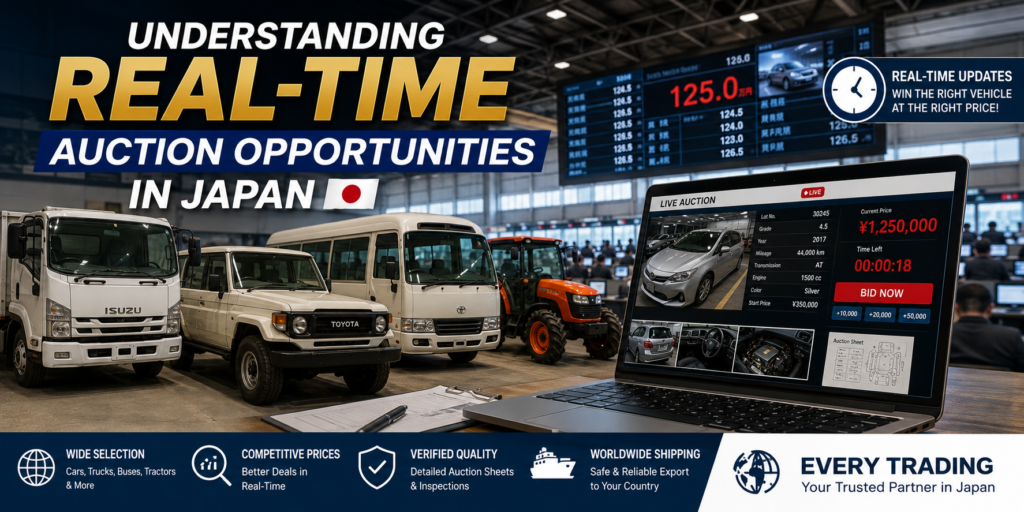
Understanding Real-Time Auction Opportunities in Japan
Search available auction vehicles here:
Browse Auction Vehicles
Why Real-Time Japanese Auctions Matter
Japanese used vehicle auctions give overseas buyers fast access to cars, trucks, buses, tractors, and machinery from all over Japan.
Every day, many vehicles appear in auction systems. Some units sell quickly. Others may offer strong value for buyers who can make fast and smart decisions.
For importers, dealers, and business buyers, real-time auction information is very important. It helps buyers find vehicles before competitors do. It also helps them compare prices, check condition, and plan exports more clearly.
This guide explains how real-time auction opportunities work in Japan. It also shows how overseas buyers can use them safely with support from a professional export company.
How Japanese Used Vehicle Auctions Work
Japan has a large used vehicle auction network. Auction houses operate in many regions, from Hokkaido to Kyushu. These auctions collect vehicles from dealers, companies, leasing firms, rental companies, and private trade-ins.
Most auctions are not open to the general public. They are mainly for registered dealers and licensed members. For this reason, overseas buyers usually need a Japanese exporter or auction agent.
Main Vehicle Types in Japanese Auctions
- Used passenger cars
- Commercial trucks
- Mini trucks and vans
- Buses and microbuses
- Farm tractors
- Construction machinery
- Special purpose vehicles
- Classic and rare Japanese models
Each vehicle has photos, basic data, and an auction inspection sheet. This information helps buyers understand the vehicle before bidding.
What Is Real-Time Auction Access?
Real-time auction access means buyers can check available vehicles close to the actual auction time. They can see updated listings, auction dates, vehicle grades, starting prices, and auction sheet details.
This is useful because auction stock changes every day. A good vehicle may appear today and disappear tomorrow.
Why Overseas Buyers Use Japanese Auctions
Large Stock Selection
Japanese auctions offer a wide range of vehicles. Buyers can search by maker, model, year, mileage, transmission, fuel type, body type, and auction grade.
This makes Japan a strong source for buyers who need specific vehicles for their local market.
Better Chance to Find Special Vehicles
Some vehicles are difficult to find from normal dealer stock. Auctions may offer older diesel models, 4WD trucks, low-mileage buses, and special commercial vehicles.
For many buyers, this is the biggest advantage of Japanese auctions.
Transparent Condition Information
Japanese auction sheets give useful information about condition. They often include exterior marks, interior grade, mileage, repair history, rust points, and mechanical comments.
This helps overseas buyers reduce risk before purchase.
Competitive Buying Opportunities
Auction prices change based on demand. Sometimes buyers can purchase vehicles at better prices than fixed dealer stock.
However, low price should not be the only target. Condition, export cost, shipping, and import rules are also important.
The Purchase Flow from Japanese Auctions
Step 1: Search Available Vehicles
The first step is to search current auction listings. Buyers should check vehicle photos, model code, year, mileage, grade, and location.
For commercial vehicles, buyers should also check body type, engine model, payload, transmission, and equipment.
Step 2: Check the Auction Sheet
The auction sheet is one of the most important documents. It gives condition details that photos may not show clearly.
Buyers should check:
- Auction grade
- Interior grade
- Accident or repair history
- Rust and corrosion comments
- Engine and transmission notes
- Body damage marks
- Odometer comments
Step 3: Confirm Total Budget
Before bidding, buyers should confirm the full landed cost. The auction price is only one part of the total.
The total cost may include:
- Vehicle price
- Auction fee
- Exporter service fee
- Transport to port
- Export inspection
- Shipping cost
- Insurance
- Import duty and local charges
Step 4: Place a Bid
After checking the vehicle and budget, the exporter places a bid. The buyer should decide the maximum bid before the auction starts.
Real-time bidding can move quickly. A clear budget helps avoid emotional overbidding.
Step 5: Payment and Export Preparation
If the bid is successful, the exporter completes the purchase process in Japan. The vehicle is then transported, prepared, inspected if needed, and shipped to the buyer’s destination port.
Important Points Before Bidding
Do Not Judge by Photos Only
Photos are useful, but they do not show everything. Rust, oil leaks, engine noise, and previous repairs may not be clear in photos.
Always check the auction sheet and ask an experienced exporter for support.
Understand Auction Grades
Auction grades help buyers compare vehicles quickly. However, the meaning of grades can vary by auction house.
For example, Grade 4 usually means good used condition. Grade R usually means repaired history. Grade 3.5 may still be useful, but it needs careful checking.
Check Import Rules in Your Country
Every country has different import rules. Some countries have age limits. Others require special inspections or emission standards.
Before bidding, buyers should confirm that the vehicle can be imported legally.
Be Careful with Very Cheap Vehicles
A very low price may look attractive. However, it may mean the vehicle has rust, accident history, mechanical issues, or high repair costs.
The best auction purchase is not always the cheapest one. It is the vehicle that fits your market, budget, and condition needs.
Why Professional Export Companies Are Important
Japanese auctions are powerful, but they can be difficult for overseas buyers. A professional exporter helps buyers understand the system and avoid costly mistakes.
Auction Sheet Translation
Most auction information is written in Japanese. Export companies can translate key points and explain important notes.
Market Advice
Experienced exporters understand which vehicles are popular in Africa, the Caribbean, Asia, Oceania, and other regions.
They can recommend suitable vehicles based on local road conditions, fuel quality, parts availability, and resale value.
Safer Bidding
Professional exporters help buyers set a realistic bid. They can also warn buyers when a vehicle has risk points.
Export and Shipping Support
After purchase, the exporter manages domestic transport, paperwork, port booking, and shipping documents.
This saves time and reduces stress for overseas buyers.
How to Use Real-Time Auction Opportunities Wisely
Prepare Your Target List
Before searching, buyers should prepare a clear target list. This may include maker, model, year range, engine type, budget, and destination country.
Search Often
Good vehicles may appear suddenly. Buyers who search often have a better chance of finding the right unit.
Act Quickly, But Carefully
Real-time opportunities require speed. However, buyers should not rush without checking condition and total cost.
Work with a Reliable Export Partner
A reliable partner can help you move fast while still checking important details.
Best Buyers for Japanese Auction Vehicles
Japanese auctions are useful for many types of overseas buyers.
- Used car dealers
- Truck importers
- Bus operators
- Farm equipment dealers
- Construction companies
- Private buyers looking for special models
- Fleet buyers
For business buyers, auctions can become a regular supply source. They can search many units and buy according to market demand.
Conclusion
Real-time Japanese auction access gives overseas buyers a strong advantage. It allows buyers to find cars, trucks, buses, tractors, and machinery directly from Japan’s large used vehicle market.
However, buyers must understand the auction system, read condition information carefully, confirm import rules, and calculate total costs before bidding.
Using a professional Japanese export company is one of the safest ways to buy from auctions. It helps buyers avoid mistakes and export vehicles smoothly.
EVERY TRADING is a Japanese used vehicle export company. We export cars, trucks, buses, tractors, and machinery to customers around the world.
Through our Japanese auction vehicle search system, overseas buyers can search available auction vehicles from Japan and find the right unit for their business.
Learn more about Japanese auctions:
Japanese Car Auction Guide
Start searching your vehicle from Japan today:
Search Auction Vehicles Now


Browse Reliable Used Trucks & Buses from Japan
Carefully selected vehicles ready for export worldwide
Search 100,000+ Dealer Stock Vehicles from Japan
Access a wide selection of vehicles from Japanese dealers nationwide. Updated daily.