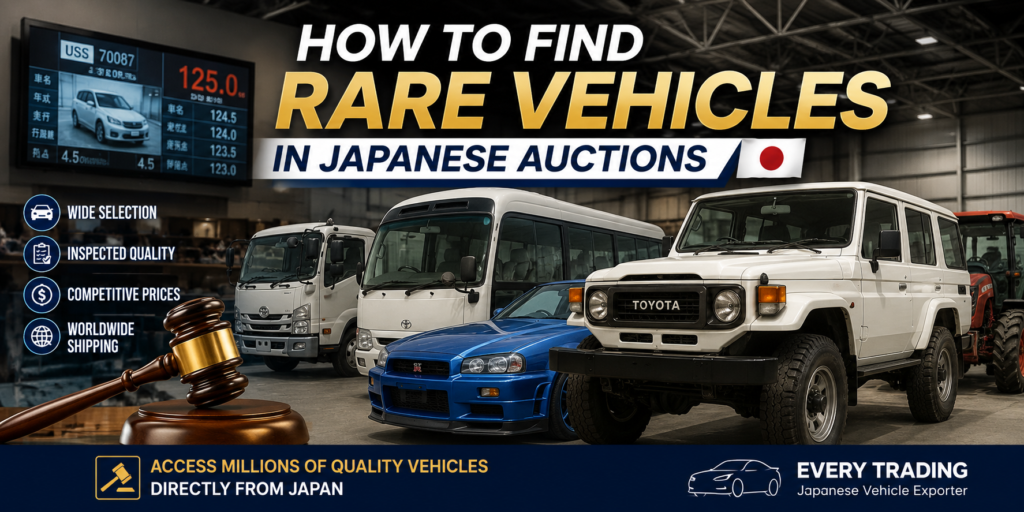
How to Find Rare Vehicles in Japanese Auctions
Search available auction vehicles here:
Browse Auction Vehicles
Why Rare Japanese Vehicles Are in High Demand
Japanese used vehicles are popular across the world because they offer high quality, long life, and excellent maintenance history. However, many overseas buyers are not only looking for standard vehicles. They want rare trucks, special buses, limited tractors, classic SUVs, and hard-to-find commercial models.
Japanese vehicle auctions are one of the best places to find these rare units. Thousands of vehicles enter auctions every day across Japan. Some are common. Others are extremely difficult to find outside Japan.
For importers, dealers, and business buyers, learning how Japanese auctions work can create new business opportunities. Buyers can access vehicles that local markets cannot easily provide.
This guide explains how to find rare vehicles in Japanese auctions, how the auction system works, and why many international buyers use professional exporters to purchase safely from Japan.
How Japanese Used Vehicle Auctions Work
Japan has one of the largest used vehicle auction networks in the world. Hundreds of auction houses operate across the country. Every week, thousands of vehicles are listed for sale.
These auctions include:
- Passenger cars
- Commercial trucks
- Buses
- Construction machinery
- Farm tractors
- Luxury vehicles
- Classic vehicles
- Limited production models
Most auctions are dealer-only auctions. This means regular overseas buyers cannot directly participate without a licensed exporter or auction member.
Auction Houses in Japan
Some major Japanese auction groups include:
- USS Auctions
- TAA Auctions
- JU Auctions
- CAA Auctions
- HAA Auctions
- ARAI Auctions
Each auction has different inventory. Some specialize in passenger vehicles. Others focus on heavy machinery, trucks, buses, or agricultural equipment.
Auction Inspection System
One major advantage of Japanese auctions is the inspection system.
Professional inspectors check each vehicle before auction. They prepare an auction sheet that explains:
- Exterior condition
- Interior condition
- Engine condition
- Repair history
- Mileage
- Rust or corrosion
- Modification details
- Overall grade
This system helps overseas buyers make better purchasing decisions.
What Makes a Vehicle Rare in Japanese Auctions?
Rare vehicles can mean many different things depending on the market.
For some buyers, rare means limited production sports cars. For others, it means discontinued trucks, old buses, or unique agricultural tractors.
Examples of Rare Vehicles
- Classic Toyota Land Cruiser models
- Low-mileage Japanese fire trucks
- Special edition SUVs
- Manual transmission diesel vehicles
- Vintage buses
- 4WD mini trucks
- Older farm tractors with simple engines
- Heavy-duty commercial trucks
- Japanese domestic market (JDM) sports cars
Many overseas buyers search for vehicles that are no longer available in their local market. Japanese auctions often become the best source for these units.
Benefits for Overseas Buyers
Access to Large Inventory
Japanese auctions provide access to massive inventory every week. Instead of searching local dealers one by one, buyers can review thousands of vehicles from one platform.
This increases the chance of finding rare models quickly.
Better Vehicle Condition
Japanese vehicles are often well maintained. Strict inspection systems and regular servicing help preserve vehicle quality.
In many countries, buyers specifically prefer Japanese auction vehicles because of their reputation for reliability.
Competitive Prices
Auction prices can sometimes be lower than dealer retail prices.
Buyers who understand the auction process can find excellent value, especially for commercial vehicles and machinery.
Wide Variety of Specifications
Japanese auctions include vehicles with many specifications:
- Diesel engines
- Manual transmission
- 4WD systems
- Refrigerated trucks
- Crane trucks
- High-roof vans
- Low mileage units
- Special factory options
This variety helps buyers match local market demand.
How to Find Rare Vehicles Successfully
Search Auctions Daily
Rare vehicles do not appear every day. Serious buyers check auction inventory regularly.
Some rare units appear only once every few months. Fast action is important.
Use Multiple Auction Networks
Not all auction houses have the same inventory.
Professional exporters can access many auction systems at the same time. This increases the chance of finding special vehicles.
Know the Vehicle Codes
Japanese vehicles often use chassis codes and model codes.
For example:
- HZJ77
- BNR34
- XZU341
- FK61F
- GDJ76W
Searching by model code is usually more effective than searching by vehicle name only.
Understand Auction Grades
Auction grades help buyers understand vehicle condition quickly.
For example:
- Grade 5 = Excellent condition
- Grade 4.5 = Very good condition
- Grade 4 = Good condition
- Grade 3.5 = Average used condition
- Grade R = Repaired history vehicle
Understanding these grades helps buyers avoid problems.
Work With Experienced Exporters
Experienced exporters can help buyers identify high-quality vehicles and avoid risky purchases.
They can also translate auction sheets and explain hidden issues.
The Vehicle Purchase Process
Step 1: Search Auction Inventory
Buyers first search available vehicles through auction systems.
They can review:
- Photos
- Auction grades
- Inspection sheets
- Vehicle specifications
- Auction schedules
Step 2: Decide Your Budget
Before bidding, buyers should decide their maximum budget.
The total cost includes:
- Auction price
- Exporter fees
- Shipping cost
- Port charges
- Import taxes
- Inspection fees
Step 3: Place a Bid
The exporter places bids during the auction.
If the bid wins, the vehicle is purchased.
Step 4: Vehicle Inspection and Preparation
After purchase, exporters usually inspect the vehicle again.
Some buyers also request:
- Additional photos
- Engine checks
- Oil replacement
- Cleaning services
- Spare parts
Step 5: Shipping
The vehicle is transported to a Japanese port and prepared for export.
Common shipping methods include:
- RORO shipping
- Container shipping
Shipping documents are then sent to the buyer.
Important Things to Watch Out For
Rust and Corrosion
Some vehicles from snowy regions may have rust underneath.
This is especially important for trucks and older SUVs.
Modified Vehicles
Some auction vehicles have aftermarket modifications.
These may affect import regulations in certain countries.
Repair History
Vehicles with accident history may still perform well, but buyers should understand the repair details carefully.
Import Regulations
Each country has different import rules.
Buyers should confirm:
- Vehicle age limits
- Emission regulations
- Inspection requirements
- Left-hand drive restrictions
- Import taxes
Fake Exporters
Unfortunately, some fraudulent companies exist online.
Buyers should always work with trusted exporters that have:
- Export experience
- Verified company information
- Real customer reviews
- Professional communication
- Auction access
Why Professional Export Companies Matter
Professional Japanese exporters provide much more than auction access.
Expert Vehicle Selection
Experienced exporters understand which vehicles are best for each market.
They can recommend reliable models with strong resale value.
Auction Sheet Translation
Most auction sheets are written in Japanese.
Export companies help buyers understand important details before bidding.
Shipping and Documentation Support
International shipping requires many documents.
Professional exporters handle:
- Export certificates
- Bills of lading
- Inspection certificates
- Customs paperwork
- Shipping schedules
Better Communication
Reliable exporters provide updates during the entire process.
This reduces stress for overseas buyers.
Access to Rare Inventory
Some exporters also have dealer networks across Japan.
This means buyers can access both auction vehicles and dealer stock.
Best Vehicle Types to Search in Japanese Auctions
Commercial Trucks
Japanese trucks are very popular in Africa, the Caribbean, Asia, and Oceania.
Buyers often search for:
- HINO Ranger
- Mitsubishi Fuso Fighter
- Isuzu Forward
- Toyota Dyna
- HINO Dutro
Buses
Japanese buses are known for durability and fuel efficiency.
Popular auction choices include:
- Toyota Coaster
- HINO Liesse
- Civilian buses
Farm Tractors
Japanese tractors remain highly popular worldwide because they are compact, fuel efficient, and easy to maintain.
Many buyers search auctions for:
- Kubota tractors
- Yanmar tractors
- Iseki tractors
- Massey Ferguson units
- New Holland tractors
Classic SUVs
Classic Japanese SUVs continue to grow in value worldwide.
Collectors and off-road enthusiasts actively search for older Land Cruiser models and rare diesel 4WD vehicles.
Conclusion
Japanese used vehicle auctions offer incredible opportunities for overseas buyers looking for rare vehicles, commercial trucks, buses, tractors, and special Japanese models.
With access to large inventory, reliable inspection systems, and competitive prices, Japanese auctions continue to attract buyers from around the world.
However, successful purchasing requires knowledge, careful inspection, and trusted export support.
Working with an experienced Japanese exporter can help buyers avoid risks, understand auction information, and purchase high-quality vehicles safely.
EVERY TRADING is a Japanese used vehicle export company that supplies vehicles to customers around the world. The company helps overseas buyers access Japanese auction inventory, search for rare vehicles, and export cars, trucks, buses, tractors, and machinery directly from Japan.
Learn more about Japanese auctions:
Japanese Car Auction Guide
Start searching your vehicle from Japan today:
Search Auction Vehicles Now


Browse Reliable Used Trucks & Buses from Japan
Carefully selected vehicles ready for export worldwide
Search 100,000+ Dealer Stock Vehicles from Japan
Access a wide selection of vehicles from Japanese dealers nationwide. Updated daily.