Dealer Stock vs Private Sales in Japan
Dealer stock vs private sales in Japan is an important topic for importers and business buyers who want to source used cars, trucks, buses, and machinery. Each method has different advantages, risks, and processes. Understanding these differences helps buyers make better decisions and avoid problems.
Japanese vehicles are known for quality and reliability. However, how you buy them matters. Dealer stock offers a fast and simple way to purchase vehicles, while private sales may offer lower prices but come with higher risk and less support.
For overseas buyers, speed, trust, and clear information are key factors. That is why many professionals review the Japanese dealer stock vehicles guide before choosing how to buy vehicles from Japan.
What Is Dealer Stock in Japan?
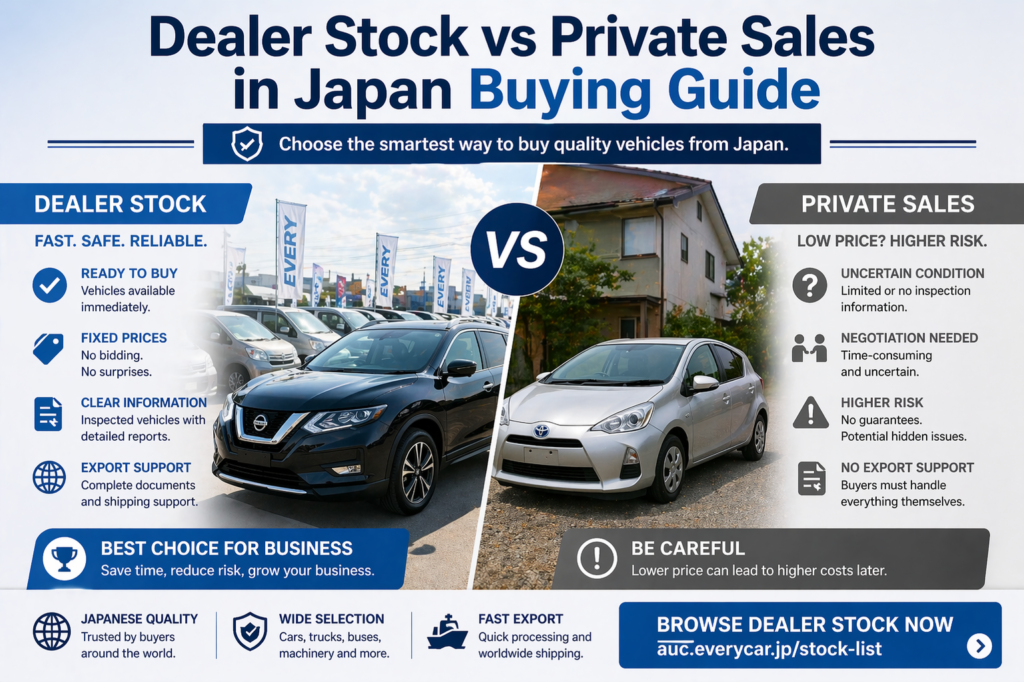
Dealer stock refers to vehicles that are already owned by Japanese dealers and available for immediate purchase. These vehicles are inspected, listed with clear details, and ready for export. Buyers can confirm the condition, check the price, and complete the deal quickly.
Dealer stock is popular because it offers a simple and reliable process. There is no need to wait for auction dates or negotiate with private sellers. The price is fixed, and the vehicle is ready to ship.
Another advantage is transparency. Buyers receive clear information about condition, mileage, and specifications. This helps reduce risk, especially for overseas buyers who cannot inspect vehicles in person.
Many importers choose Japanese dealer stock vehicles because they want fast transactions and stable business operations.
What Are Private Sales in Japan?
Private sales refer to vehicles sold directly by individuals or non-dealer owners. These vehicles may sometimes be offered at lower prices, but the process is less structured and may involve more risk.
In private sales, information may not always be complete or clear. Buyers must check condition carefully and confirm documents independently. There is also less support for export procedures.
Negotiation is often required in private sales. This can take time and may create uncertainty in pricing. For business buyers, this lack of clarity can make planning more difficult.
Private sales may work for experienced buyers who can inspect vehicles directly. However, for overseas importers, this method is usually more complex and less reliable.
Key Differences Between Dealer Stock and Private Sales
The biggest difference between dealer stock vs private sales in Japan is speed. Dealer stock allows immediate purchase, while private sales often require negotiation and waiting time.
Pricing is also different. Dealer stock has fixed prices, which helps buyers plan budgets. Private sales may offer lower prices, but final cost can change depending on negotiation and condition.
Risk level is another important factor. Dealer stock provides clear information and professional support, which reduces risk. Private sales have less transparency, which can increase the chance of unexpected problems.
Export support is also stronger with dealer stock. Professional exporters handle documents, shipping, and inspection. In private sales, buyers must manage these steps themselves or find separate support.
For most importers, dealer stock offers a better balance of speed, reliability, and simplicity.
Why Dealer Stock Is Better for Business Buyers
Dealer stock is the best choice for most business buyers because it supports fast and stable operations. Companies need vehicles quickly to meet customer demand. Waiting for private deals can slow down business growth.
With dealer stock, buyers can secure vehicles immediately and prepare export without delay. This helps maintain inventory and improve customer service.
Fixed pricing also improves financial planning. Buyers can calculate total costs, including shipping and resale price, more accurately. This reduces risk and improves profit control.
Many professionals use used vehicles from Japan dealer stock to keep their operations efficient. It allows them to focus on sales and customer service instead of complicated purchasing processes.
Working with a trusted exporter like EVERY adds more value. Buyers receive clear communication, reliable information, and full export support. This makes the process smooth from selection to delivery.
Conclusion
Dealer stock vs private sales in Japan is a key decision for importers and business buyers. While private sales may offer lower prices, they often come with higher risk and more complex processes.
Dealer stock provides a faster, safer, and more reliable way to buy vehicles. With fixed prices, ready-to-export units, and professional support, buyers can make confident decisions and reduce risk.
For global businesses that rely on cars, trucks, buses, and machinery, choosing dealer stock is a practical strategy. It supports speed, trust, and simplicity, which are essential for long-term success.


Browse Reliable Used Trucks & Buses from Japan
Carefully selected vehicles ready for export worldwide
Search 100,000+ Dealer Stock Vehicles from Japan
Access a wide selection of vehicles from Japanese dealers nationwide. Updated daily.