Dealer Stock vs Auctions: Which is Better for You?
Dealer Stock vs Auctions: Which is Better for You? is a very important question for overseas buyers. If you import cars, trucks, buses, or tractors from Japan, your buying method can affect your speed, cost, and profit. Choosing the right option helps your business grow with less risk.
Many buyers use Japanese auctions because they offer a large number of vehicles. However, dealer stock is becoming more popular because it is faster and simpler. For business buyers, speed and clear pricing are often more important than waiting for auction results.
In this guide, we compare dealer stock and auctions in a practical way. This will help you decide which option is better for your business, market, and purchase style.
1. What Is Dealer Stock and What Are Auctions?
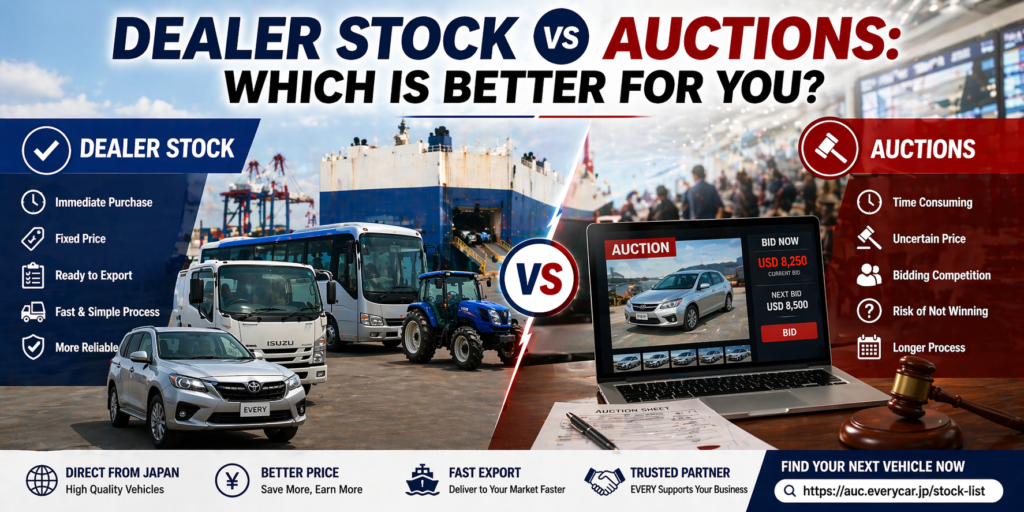
Before comparing both options, it is important to understand the difference. Dealer stock means vehicles that are already owned or listed by dealers and are ready for direct purchase. Auctions are marketplace systems where buyers bid against others.
With dealer stock, the process is very direct. You choose the vehicle, confirm the price, and proceed to purchase. With auctions, you must wait for the auction date, place a bid, and hope you win.
Dealer stock usually offers:
- Immediate purchase
- Fixed pricing
- Quick vehicle confirmation
- Fast export preparation
Auctions usually offer:
- Large volume of listings
- Competitive bidding
- Price uncertainty
- More waiting time
For buyers who want speed and easy decisions, many prefer Japanese dealer stock vehicles because they are ready to buy now.
This also works well for tractor buyers and machinery buyers. A direct purchase model is often easier when you need quick export and less complexity.
2. Dealer Stock Is Better for Speed and Simplicity
If speed matters to your business, dealer stock is often the better choice. This is one of the biggest reasons why many importers now choose dealer stock instead of auctions.
With dealer stock, there is no waiting for auction schedules. You do not need to compete with other buyers. You can move forward as soon as you find the right unit.
This gives several advantages:
- Fast response to customer orders
- Better inventory control
- Simpler purchase process
- Less stress for buyers
For example, if you find a truck, bus, or tractor that fits your needs, you can confirm it quickly and arrange export soon after payment. This is very useful for business buyers who need to deliver to their own customers without delay.
Many importers choose used vehicles from Japan dealer stock because they want this kind of speed and simplicity.
Auctions can still be useful, but they are slower by nature. You must wait, bid, and sometimes lose the vehicle after spending time on the process. That delay can affect your business.
3. Auctions May Offer Variety, but They Also Add Uncertainty
Auctions are popular because they provide access to many vehicles. Buyers can search across different makes, models, and grades. In some cases, this is useful when looking for very specific units.
However, auctions also create uncertainty. You do not always know the final purchase price until the bidding is over. Another buyer may offer more. You may also spend time on several vehicles and not secure any of them.
Main auction challenges include:
- Uncertain final prices
- Waiting for auction dates
- Competition from other bidders
- Possible delays after winning
For experienced buyers, auctions may still be part of the strategy. But for many importers, especially those who need stable supply, dealer stock gives a more reliable business model.
This is true not only for passenger vehicles, but also for buses, trucks, tractors, and other equipment. Business buyers often prefer a direct purchase system because it helps them plan costs and delivery dates more clearly.
4. Which One Is Better for Your Business?
The answer depends on your priority. If your main goal is speed, fixed pricing, and easy export, dealer stock is usually better. If your main goal is searching a very large auction pool and you are comfortable with bidding risk, auctions may still have value.
Dealer stock is often better for:
- Urgent vehicle orders
- Repeat business buying
- Clear cost planning
- Simple export workflows
Auctions may be useful for:
- Searching very specific models
- Buyers who accept more risk
- Buyers with time to wait
For most overseas buyers, especially in export markets where timing matters, dealer stock offers better business control. It combines speed, trust, and simplicity in one process.
If you want to understand more about direct purchasing, visit the Japanese dealer stock vehicles guide. It explains how buyers can purchase directly from Japan with a simple process.
Working with a trusted exporter makes dealer stock even stronger. You get fast communication, clear information, and efficient export support. That combination is very useful for long-term business growth.
Conclusion
Dealer Stock vs Auctions: Which is Better for You? depends on your business style, but for many importers, dealer stock is the stronger option. It allows immediate purchase, fixed prices, and fast export. These benefits help reduce delays and improve business performance.
Auctions can offer variety, but they also bring more waiting and more uncertainty. Dealer stock gives buyers a more direct and reliable path.
EVERY supports global buyers with professional export service and ready-to-buy options from Japan. Whether you need cars, trucks, buses, or tractors, choosing the right buying method can help your business grow with speed, trust, and confidence.


Browse Reliable Used Trucks & Buses from Japan
Carefully selected vehicles ready for export worldwide
Search 100,000+ Dealer Stock Vehicles from Japan
Access a wide selection of vehicles from Japanese dealers nationwide. Updated daily.