
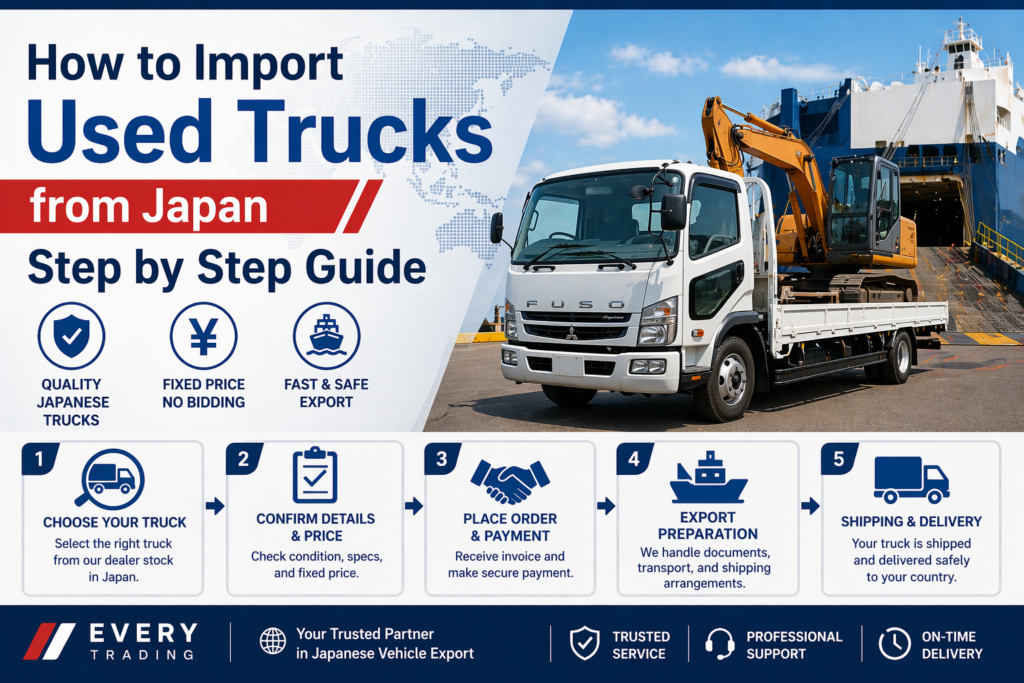
How to Import Used Trucks from Japan Step by Step
Many global buyers want to understand how to import used trucks from Japan step by step. Japan is one of the best sources for reliable trucks, with strong quality, good maintenance, and long service life.
For buyers in Africa, the Caribbean, Asia, and other regions, importing directly from Japan offers better value and more vehicle options. However, the process can feel complex at first.
This guide explains each step in a simple way. It focuses on speed, trust, and easy buying using dealer stock vehicles. This helps both beginners and professional importers make better decisions.
Step 1: Choose the Right Truck for Your Market
The first step is selecting the right truck. You should consider your local market needs, road conditions, and business purpose.
For example, light-duty trucks are popular for delivery services. Medium and heavy-duty trucks are better for construction or logistics. Japan offers a wide range of options.
Many buyers start by browsing Japanese dealer stock vehicles. This allows you to find trucks that are already available for immediate purchase.
Dealer stock is useful because vehicles are ready to buy. You do not need to wait for auctions. This helps you secure the truck quickly and move forward with your business.
Step 2: Confirm Price and Vehicle Details
Once you find a truck, the next step is to check the details carefully. Look at the model year, mileage, engine condition, and specifications.
Dealer stock vehicles come with fixed pricing. This means you know the cost before you buy. It is easier to calculate your total budget and resale plan.
When comparing used vehicles from Japan dealer stock, you can review multiple options quickly. This helps you choose the best truck for your needs.
You can also ask the exporter for more information if needed. Good exporters provide clear answers and support. This builds trust and helps you avoid problems.
Step 3: Complete Purchase and Arrange Export
After confirming the truck, you will receive a proforma invoice from the exporter. This document shows the vehicle price and export details.
Next, you make the payment based on the agreed terms. Since the truck is already in dealer stock, the process can move quickly.
The exporter will then prepare the truck for shipment. This includes document processing, inland transport to the port, and booking the vessel.
Because dealer stock vehicles are already secured, export preparation starts immediately. This reduces waiting time and speeds up delivery.
Step 4: Shipping and Delivery to Your Country
The final step is shipping and receiving the truck. Most vehicles are shipped by RoRo (Roll-on/Roll-off) or container, depending on your preference.
The exporter will send important documents such as the Bill of Lading, invoice, and export certificate. You will use these documents for customs clearance in your country.
Once the truck arrives, you complete local import procedures and take delivery. After that, the truck is ready for use or resale.
If you want more details about the buying system, you can check this Japanese dealer stock vehicles guide.
This step-by-step process shows how simple importing can be when you work with trusted exporters and use dealer stock.
Conclusion
Learning how to import used trucks from Japan step by step helps you reduce risk and improve your business results. The process becomes easier when you follow a clear system.
Dealer stock vehicles offer major advantages. You can buy immediately, know the fixed price, and start export without delay. This is ideal for trucks, but also for cars, buses, and tractors.
For overseas buyers, choosing dealer stock means faster delivery, better planning, and stronger trust with your supplier. It is a smart and efficient way to grow your import business.


Browse Reliable Used Trucks & Buses from Japan
Carefully selected vehicles ready for export worldwide
Search 100,000+ Dealer Stock Vehicles from Japan
Access a wide selection of vehicles from Japanese dealers nationwide. Updated daily.